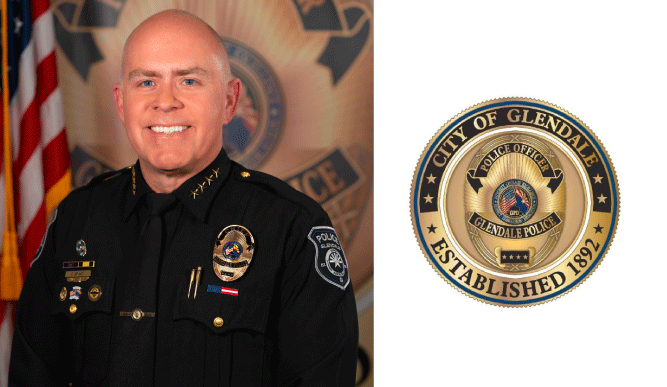

Glendale’s Progressive Policing: A Closer Look at Homegrown Leadership
The recent appointment of Colby Brandt as Chief of Police for the Glendale Police Department presents an intriguing case study in internal advancement. In a community known for its commitment to fostering leaders from within, Brandt’s rise exemplifies how cultivating leadership talent over many years can result in a formidable policing strategy that is firmly anchored in the values of the community. This opinion editorial aims to take a closer look at the story behind this appointment, highlight the subtle details of his career, and explore what his leadership might mean for Glendale’s future.
In this piece, we are not merely recounting the facts of an appointment. Instead, we are diving into the tricky parts of leadership evolution—how experiences gained lower in the ranks can shape approaches to policing and how homegrown leaders can help form bonds with the people they serve. With 28 years of service under his belt, Colby Brandt’s journey is full of tangled issues and fine points that are worth appreciating not only as a biography but as a lesson in practical leadership development.
The Journey of a Homegrown Leader in Law Enforcement
Brandt’s career story is a blend of persistence, hard work, and dedicated service that started in 1997. As a second-generation law enforcement officer, he had the opportunity to learn on the job from mentors who took the time to guide him through the many twists and turns that characterize a career in public service. His role as Interim Police Chief for four months already demonstrated an ability to steer through complicated pieces of law enforcement that involve both operational challenges and community engagement.
Many might argue that grooming leaders internally majorly benefits a police department. When you have someone who has shown unwavering commitment over decades, it minimizes the confusing bits that often come when an outsider is brought in. Instead, someone like Chief Brandt understands the specific needs and expectations of both the department and the citizens. This kind of homegrown leadership is not only comforting to those within the agency—it’s also reassuring to the community that relies on consistent and compassionate policing.
Understanding the Value of Internal Promotions
Internal promotions in law enforcement departments are not simple decisions to be made overnight. The decision to name an outsider versus promoting someone who has spent years learning and adapting on the job is one that involves many nerve-racking choice points, both for leadership and the public. Promoting from within allows a department to build on the foundation of experience that officers have garnered by directly engaging with the community’s needs and the department’s history.
Key Advantages of a Homegrown Leader
- Deep Local Knowledge: Brandt’s long-term tenure means he has witnessed the evolution of community dynamics firsthand, allowing him to understand and address local concerns more effectively.
- Consistency in Leadership Style: Having spent many years within the department, he is familiar with the institutional culture and can maintain consistency in policies and practices.
- Enhanced Trust: Both the officers under his command and the public are likely to trust a leader who has “worked their way” up the ladder, rather than someone who is unfamiliar with the local context.
- Mentorship and Professional Growth: His promotion reflects a commitment to developing talent within the organization, which in turn motivates younger officers to aspire to leadership roles.
Each of these bullet points highlights not only the tactical benefits of internal promotions but also the strategic advantages that come with maintaining continuity in leadership. It is often the small distinctions—a result of years of working closely with a community and understanding its subtle parts—that culminate in effective public service.
Examining the Roles That Shaped a Future Chief
When we get into the career roles that have shaped Colby Brandt, it becomes clear that his journey is a tapestry of various responsibilities and challenges that have prepared him for the top post. Prior to his appointment as Chief, Brandt held numerous posts ranging from Patrol Officer to Neighborhood Response Squad Sergeant, each offering him a chance to pick up the nitty-gritty of law enforcement operations.
His service record, which includes positions like Patrol Lieutenant and General Investigations Lieutenant, shows how dealing with everyday challenges can lead to a comprehensive understanding of the department’s operational structure. By engaging with both the exciting and intimidating parts of police work—from routine patrol duties to investigating complex crimes—he has accumulated a wealth of practical knowledge that serves him well in leadership.
Table: Career Milestones and Their Impact
| Position | Key Responsibilities | Leadership Qualities Developed |
|---|---|---|
| Patrol Officer | Community engagement, first response, daily law enforcement tasks | Quick decision-making, public interaction, resourcefulness |
| Neighborhood Response Squad Sergeant | Managing patrol teams, engaging with neighborhood safety issues | Team coordination, local problem-solving, empathetic leadership |
| General Investigations Lieutenant | Overseeing complex investigations, ensuring procedural standards | Analytical thinking, ethical judgment, thoroughness |
| Administrative Services Commander | Supervising training, budgeting, personnel management | Organizational skills, resource allocation, strategic planning |
This table illustrates that each role served as an opportunity for refining practical skills and leadership qualities, from on-field rapid response to high-stakes administrative duties. It underscores how multifaceted experience is essential in preparing a candidate not just to manage the department, but to innovate and enhance public safety.
Strengthening Community Ties: A Core Priority
Police leadership today is not only about maintaining law and order. It is also about building relationships and fostering partnerships with the community. In his remarks, Chief Brandt emphasized his commitment to ensuring that Glendale remains a safe and welcoming location for residents and visitors alike. This vision is deeply rooted in community relationships and strategic outreach—a tactic that goes beyond the mere application of law.
When dealing with public safety issues, subtle details such as community sentiment and the small twists in local opinions play a key role. It is these fine shades of social dynamics that effective policing must address. Chief Brandt’s approach is to build regional partnerships, which often means working alongside neighborhood groups, local businesses, and civic organizations. These coordinated campaigns, when managed properly, can significantly improve traffic safety, particularly through enhanced speed enforcement and other measures that benefit both drivers and pedestrians.
Community Engagement Strategies
- Regular Town Hall Meetings: Open forums where citizens can voice their concerns and suggestions.
- Collaborative Safety Workshops: Sessions featuring police officers and community leaders discussing crime prevention techniques.
- Joint Community-Police Initiatives: Projects that include neighborhood watches, local safety patrols, and public awareness campaigns.
- Social Media Outreach: Utilizing platforms to communicate with the public, share updates, and receive real-time feedback.
These strategies help foster an environment where law enforcement and residents can work together to cultivate trust and mutual respect. They also emphasize on addressing tangled issues head on—by breaking down barriers and making sure that all voices are heard in the conversation about communal safety.
Overcoming Challenges in Modern Policing
Modern policing is full of problems that sometimes seem overwhelming. From the increasing complexity of crimes to the ever-evolving tactics of criminal elements, the challenges faced by law enforcement agencies today require a dynamic and flexible approach. Chief Brandt’s leadership is set against a backdrop of a rapidly changing world where officers must get into both traditional and new forms of crime-fighting.
One of the most intimidating areas in contemporary law enforcement is the management of public safety in an era characterized by technological integration and heightened public scrutiny. The laws, procedures, and societal expectations are in a state of constant evolution, making it essential for leaders to figure a path that respects legacy while embracing innovative practices. In Glendale, the emphasis has been on enhancing traffic safety measures—an area that, while seemingly straightforward, has its own set of challenging bits that can be best managed with modern tools and community support.
Key Areas of Focus in Modern Policing
- Technological Advancements: Integrating tools like speed enforcement devices and surveillance systems.
- Comprehensive Training Programs: Ensuring that every officer is up-to-date with both traditional tactics and modern technological methods.
- Enhanced Communication Channels: Establishing robust networks for quick information sharing among police units and with the community.
- Ethical Policing Practices: Maintaining transparency and accountability in every action taken by the department.
These focus areas highlight how even seemingly intimidating challenges can be met successfully through a combination of experience and innovation. By taking into account the little details of technological adaptation and ethical enforcement, law enforcement can better manage your way through the tricky parts of modern-day policing.
Embracing Officer Development and Mentorship
Beyond community outreach and technological integration, one of the most super important aspects of effective law enforcement lies in the ongoing development of officers. Chief Brandt’s background in overseeing training, budgeting, and grant management as the Administrative Services Commander demonstrates his commitment to officer development.
The value of mentoring within a law enforcement context is evident in the way it prepares individuals to lead in high-pressure situations. Proficient mentorship involves not only passing on practical, day-to-day skills but also addressing the hidden complexities of ethical decision making, crisis management, and stress responses. Through structured mentoring programs, officers learn to break down the intimidating bits of their roles and emerge as confident members of the team.
Elements of a Successful Mentorship Program
- Comprehensive Training Modules: Interactive sessions that cover both real-world scenarios and classroom-based learning.
- Field Experience: On-the-job training that offers new recruits firsthand exposure to the challenges and rewards of police work.
- Regular Feedback Sessions: Constructive feedback from senior leadership to help officers improve and course-correct when necessary.
- Peer Support Networks: Programs that foster collegiality and mutual assistance among officers, which are key during especially tense times.
These key components serve not only as a roadmap for professional growth but also as the backbone of a resilient police force capable of weathering the many twists and turns of the law enforcement landscape. By investing in these areas, Glendale is ensuring that its officers not only uphold the law but also represent the best of what community-based policing can be.
Regional Partnerships and Their Role in Public Safety
In today’s interconnected social fabric, the success of local law enforcement is often contingent on the establishment of strong regional partnerships. Chief Brandt’s commitment to building these alliances is indicative of a broader strategy that seeks to find your way through the maze of modern public safety challenges by working closely with neighboring jurisdictions, community leaders, and even federal agencies when needed.
Regional partnerships can help de-escalate potential problems before they grow into severe issues. For instance, by collaborating with neighboring departments on traffic enforcement strategies, Glendale is not just reacting to incidents as they occur. Instead, the department is implementing proactive measures to prevent incidents, educate the public, and ensure a safer environment for residents and visitors alike.
Benefits of Strong Regional Ties
- Improved Information Sharing: Quick and efficient communication between different law enforcement entities can lead to faster resolutions of complex cases.
- Collaborative Training Opportunities: Joint training sessions and workshops can expose officers to a variety of tactics and scenarios, enhancing overall preparedness.
- Resource Optimization: Regional partnerships can help pool resources, such as specialized equipment or expertise, which might otherwise be too expensive or impractical for a single department.
- Enhanced Public Trust: A united front among different agencies can bolster public confidence, especially during times of heightened tension or uncertainty.
These benefits are more than superficial improvements. They embody a shift towards a model of policing that is capable of adapting to long-standing challenges while simultaneously anticipating future issues. The small distinctions in partnership strategies represent a pragmatic approach to ensuring the well-being of the community, highlighting how fine shades of communication and coordination can lay the groundwork for safe streets and harmonious neighborhoods.
Reflecting on Leadership in a Changing Social Landscape
As cities across the nation evolve, so too does the need for adaptive and community-centered law enforcement. The appointment of Chief Brandt is illustrative of a forward-thinking approach that honors the past yet remains attuned to future challenges. His leadership style—marked by an unwavering commitment to officer development, community engagement, and regional collaboration—exemplifies a balanced strategy for tackling both the predictable and the unexpected issues that arise in modern policing.
At its core, effective leadership in this context is about managing your way through not only the clear-cut responsibilities of law enforcement but also the creative, sometimes nerve-racking twists of a dynamic, modern society. Every decision, every initiative, and every engagement with the public reflects a commitment to leveraging years of experience and a profound understanding of the subtle details that define a community’s character.
Key Leadership Takeaways for Today’s Policing
- Homegrown Experience Matters: Leaders who have risen through the ranks bring with them a nuanced understanding of local issues.
- Community Relations are Paramount: Building trust within the community is as essential as enforcing the law.
- Continuous Professional Development: Investing in training and mentorship programs ensures a high level of preparedness and adaptability.
- Collaborative Approaches Enhance Security: Regional partnerships are not just beneficial—they are necessary in a world where threats and challenges are constantly evolving.
These takeaways illustrate that the foundation of modern law enforcement rests on a delicate balance between tradition and innovation. A leader like Chief Brandt is positioned to lead Glendale through a future that respects past achievements while proactively addressing the nerve-wracking realities of emerging challenges with practical, considerate solutions.
Charting a Future Path for Community-Centered Policing
Looking ahead, the story of Chief Brandt’s appointment signals a potential paradigm shift in how we evaluate effective law enforcement. The traditional view that leadership is all about tackling the complicated pieces of crime-fighting is being replaced—or at least complemented—by a model that emphasizes community involvement and practical experience. This modern approach recognizes that leadership is more than just holding a title; it is about constantly engaging with the community, figuring a path through societal challenges, and ensuring that every member of the team feels respected and empowered.
The emphasis on promoting homegrown talent is especially critical in this model. When officers see that their experiences and dedication can eventually translate into high-ranking positions, it inspires a generation of public servants who are willing to invest in their communities for the long haul. This mutually beneficial cycle can lead to measurable improvements, such as safer neighborhoods, improved public trust, and more effective crime prevention strategies.
Strategies for a Community-Centric Future
- Expanding Mentorship Programs: More comprehensive mentorship will help future leaders develop the small distinctions that make a difference in nuanced situations.
- Enhancing Transparency: Regular updates and open dialogue with the community can demystify policing practices and reduce tension.
- Investing in Technology: Utilizing modern speed enforcement tools and data analysis can streamline operations and enhance public safety.
- Encouraging Civic Participation: Inviting community feedback through town hall meetings and surveys to better understand local challenges.
Implementing these strategies is not without its challenges. However, by staying grounded in the community’s needs and working side by side with their partners, local law enforcement agencies can overcome many of the overwhelming and intimidating issues that arise. The future of policing looks set to be one where every stakeholder—officers, community members, and local government—plays an active role in creating a safer environment.
The Broader Legal and Social Implications
From a legal perspective, the appointment of Chief Brandt is emblematic of a broader trend towards retaining and empowering seasoned professionals who understand the labyrinth of local and state laws from the inside. His extensive education, including a Bachelor of Arts in Public Administration, a Master of Science in Homeland Security, and his certifications from renowned academies, underscores the importance of continual professional development in law enforcement careers.
These academic and training credentials are not merely badges of honor; they signal a commitment to upholding the law with precision and fairness. The legal community and the public alike watch these appointments with keen interest, as they set precedents for how law enforcement bodies can harness in-house expertise to tackle both the clear legal mandates and the more confusing bits of community-specific challenges.
Moreover, his appointment serves as an important reminder that effective law enforcement extends beyond enforcing statutes. It is about creating frameworks that allow for ethical decision making, transparent conduct, and an overall approach that is both legally sound and community oriented. When every officer is trained with these values in mind, the entire system is better equipped to address the tiny twists and sometimes nerve-wracking challenges that arise in daily operations.
Legal Frameworks Bolstering Community Policing
- Adherence to Constitutional Rights: Sound leadership ensures that the protection of citizens’ rights remains paramount.
- Ethical Use of Technology: Modern tools are implemented in ways that respect privacy while enhancing safety.
- Collaborative Legal Practices: Partnerships with legal institutions help bridge any tension between law enforcement and the judiciary.
- Transparent Policies: Clear, well-communicated policies foster understanding and trust between the department and the community.
These frameworks are critical in maintaining an environment where justice is applied fairly and with an understanding of the many complicated pieces that can affect legal interpretations in practice. In this manner, policing that is both sensitive to public concerns and rooted in a solid legal foundation can serve as a model for other jurisdictions facing similar challenges.
Concluding Thoughts: Celebrating Experience and Embracing Change
The appointment of Chief Colby Brandt is more than just a personnel update—it is a reaffirmation of the value of experience, community trust, and forward-thinking leadership in local law enforcement. As we take a closer look at his career and the thoughtful approach that has defined his journey through the tangled issues of police work, it becomes evident that his leadership embodies the essential qualities needed to move a department and its community forward.
In the current social climate, where every decision is subject to intense scrutiny and every action must be weighed against a backdrop of longstanding issues, the benefits of promoting from within become particularly clear. Chief Brandt’s journey represents an inspirational example of how working through the small distinctions of everyday responsibilities can culminate in a leadership style that is both respected by peers and embraced by the public.
As communities across the nation wrestle with balancing tradition and innovation, the Glendale model of fostering homegrown talent offers valuable lessons. By placing emphasis on mentorship, community engagement, and a deep understanding of local needs, law enforcement agencies can confidently steer through the sometimes intimidating and often overwhelming challenges of modern policing. In doing so, they ensure that the safety and well-being of everyone in the community remain at the forefront of their mission.
Looking to the future, one can only hope that this example inspires other jurisdictions to invest more in internal development, nurture strong regional partnerships, and advocate for transparent, community-focused policing methods. Whether dealing with routine traffic challenges or complex legal dilemmas, the commitment to both excellence and empathy in law enforcement is a must-have for any serious strategy aimed at building a safe, cohesive, and responsive community.
In summing up, it is clear that while every department faces its own set of tricky parts and overwhelming issues, the path chosen by Glendale stands out as both practical and promising. With leaders like Chief Brandt at the helm—leaders molded by years of hands-on experience and guided by a genuine care for the community—the future of policing in Glendale not only looks secure but also serves as a beacon for modern law enforcement strategies throughout the nation.
This ongoing story is a reminder that effective police work is never a one-size-fits-all approach—it is about carefully managing your way through detailed experiences, building trust step by step, and always remaining open to learning. As the legal and social landscapes shift, so too must our methods. And in embracing this evolution, we find that every challenge, no matter how intimidating or full of problems it may seem, is just another opportunity to reinforce a culture of service, accountability, and community solidarity.
Chief Brandt’s appointment, therefore, is not simply an isolated event in the administrative timeline—it is a pivotal moment in the evolution of Glendale’s policing philosophy, a philosophy that champions experience, internal growth, and community values as the cornerstones of modern public safety. As observers and participants in this evolving vision, it is incumbent on both citizens and public servants alike to support and contribute to a system that continually strives for excellence, empathy, and effective leadership at every level.
In conclusion, the story of Colby Brandt is a multifaceted narrative that encapsulates the benefits of promoting from within, the importance of tangible community engagement, and the critical need for adaptive, forward-looking strategies in modern law enforcement. His journey reminds us that the most effective path to a safe and thriving community is not paved solely with laws and regulations, but with a commitment to understanding, supporting, and nurturing the very people who serve and protect us every day.
Originally Post From https://www.signalsaz.com/articles/glendale-announces-colby-brandt-as-new-chief-of-police/
Read more about this topic at
Jeffrey Gonzalez Named SPIRE Academy Athletic Director
After year of turmoil and a $2 million lawsuit, N.J. school …