The National Guard Deployment Debate: Controversies and Court Battles
The recent attempts to deploy National Guard troops in several U.S. cities have sparked a heated debate over federal authority versus state rights, pulling together mixed political sentiments and legal challenges. With Memphis already witnessing an active troop presence and cities like Chicago and Portland caught in legal limbos, this issue reveals many of the tricky parts and tangled issues associated with the use of federal military assets for domestic law enforcement.
In this opinion editorial, we take a closer look at the story behind the deployments—digging into the legal arguments, the differing levels of state support, and the broader implications for the nation’s governance. Throughout the discussion, we will also unpack the little details that influence how these decisions shape community rights, federal power, and the delicate balance between security and civil liberties.
State vs. Federal Authority: The Heart of the Issue
At the center of the controversy is the issue of state versus federal authority—a debate that is loaded with problems and tense overtones. On one side, some state governors, like Tennessee’s Gov. Bill Lee, applaud the deployment of National Guard troops as a key measure to support local law enforcement. On the other side, decisions by federal courts in cities such as Chicago and Portland have put a pause on attempts by President Donald Trump to send troops into these localities, arguing that such moves violate state sovereignty and the rights enshrined in the U.S. Constitution.
This dispute over jurisdiction is not simply a legal technicality; it represents a significant struggle over who should control the forces that maintain public order. When federal officials decide to intervene in states’ affairs, the result is often a nerve-racking standoff between different levels of government. Critics argue that such interventions can lead to a slippery slope where the federal government might overstep its bounds, threatening local independence.
Key Points on Federalism and Local Control
- State Sovereignty: States maintain certain powers under the 10th Amendment, which many believe should limit federal military intervention on domestic soil.
- Federal Oversight: The federal government argues that its intervention, especially in matters of national security and immigration enforcement, is super important for maintaining order across state lines.
- Judicial Oversight: Federal courts have stepped in to strike down deployments that appear to usurp state powers, emphasizing constitutional protections and long-standing traditions of local control.
These bullet points emphasize that the debate is not merely academic—it affects the everyday lives of citizens and the way different authorities interact when it comes to law enforcement and the protection of civil liberties.
The Memphis Example: Support and Practical Implications
In Memphis, Tennessee, the situation has unfolded in a manner that contrasts sharply with the legal hold-ups in other cities. Following President Trump’s announcement on September 15 about sending troops, Tennessee Governor Bill Lee rushed to embrace the plan. Local law enforcement agencies quickly incorporated the National Guard personnel into their operations, aiming to target violent offenders while reassuring residents about the commitment to public safety.
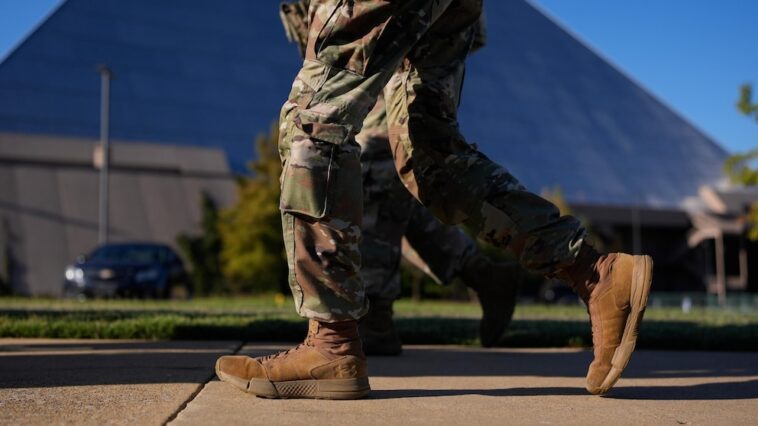
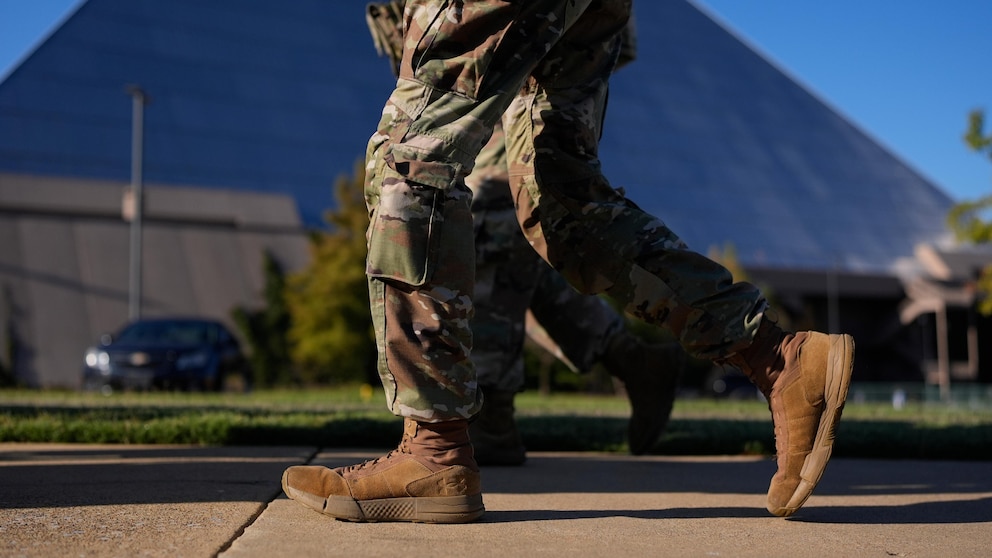
Troops in Memphis have been seen patrolling key locations, including the vicinity of a Bass Pro Shops facility and a popular tourist welcome center nearby the Mississippi River. Dressed in standard Guard fatigues and protective vests with weapons secured, they symbolize a visibly robust federal backing to local initiatives. However, the straightforward deployment in Memphis also raises several challenging questions:
- The Scope of Authority: To what extent should federal forces be allowed to operate at the behest of state governments in routine law-enforcement operations?
- Impacts on Local Communities: How might the presence of armed troops affect the relationship between local residents and law enforcement, especially if not all community members request such measures?
- Legal Precedence: What benchmarks will be set by Memphis for future operations in other cities facing similar concerns?
Proponents of the Memphis deployment point to the potential benefits of an added security layer and increased support for tackling crime. However, the arrangement remains under intense scrutiny, as it teeters precariously between effective crime control and the overreach of armed federal intervention in public spaces.
Court Rulings in Chicago and Portland: A Fight for Sovereignty
While Memphis has moved ahead with state-backed deployments, similar moves in Chicago and Portland have encountered strong resistance in the courtroom. Federal judges in both Illinois and Oregon have temporarily halted President Trump’s attempts to redirect National Guard units into these cities. In Chicago, for example, Judge April Perry ruled that deploying the Guard violated not only state sovereignty as enshrined in the 10th Amendment but also equal protection and due process guarantees found in the 14th Amendment.
Perry’s written order also spotlighted the nation’s long-standing wariness of military involvement in civilian policing—a reminder of the historical apprehensions held even by the nation’s founding thinkers. She quoted Alexander Hamilton to underline that even advocates of a strong federal government once dismissed the idea of one state’s militia being sent to another as “preposterous.” This historic perspective adds a layer of reflective irony to the contemporary legal battles, highlighting the persistent tension between centralized authority and regional self-governance.
Legal Perspectives and Constitutional Concerns
The decisions sidelining deployments in Chicago and Portland rest on several legal arguments, including:
- Violation of State Sovereignty: Courts have repeatedly warned against federal overreach, stressing that coercive deployments impinge on the powers specifically reserved for states.
- Due Process and Equal Protection: Interrupting local governance or using military might to enforce policies without clear evidence of rebellion or an imminent threat raises significant constitutional alarms.
- Historical Precedents: U.S. history is rife with examples where military force was misused. Courts are cautious about setting new precedents that could invite similar future misuse.
These aspects point to a broader consensus among many legal experts that deploying military forces in a domestic policy context is a messy, nerve-racking business—one that is riddled with legal tension and historical baggage.
Federal Agencies on the Ground: Coordination and Controversies
This debate is not limited to the courts and state governors—the everyday work of federal agencies also plays a critical role. Multiple entities, including the FBI, Drug Enforcement Administration, Immigration and Customs Enforcement (ICE), and the U.S. Marshals Service, have been actively involved alongside the National Guard. In Memphis, for example, federal agents have executed hundreds of arrests and issued thousands of traffic citations as part of a combined task force effort.
While these operations underscore the potential benefits of robust law enforcement support, they also introduce several tricky parts in coordinating multi-agency activities:
- Command and Control Issues: Aligning the operations between state-led and federally directed forces requires clear mandates and seamless communication—a challenge when different agencies operate under distinct legal frameworks.
- Community Perceptions: The mingling of traditional law enforcement with military personnel may blur the lines for communities, raising concerns about the militarization of police functions.
- Policy Consistency: As various agencies contribute to a single task force, ensuring that each acts within its constitutional boundaries is a responsibility that cannot be taken lightly.
These points illustrate that while coordinated efforts have the potential to be effective, they also introduce a multitude of fine points that can complicate efforts to manage public safety without overstepping legal limits.
Legal Implications of Federal Troop Deployments in Urban Areas
The efforts to deploy National Guard troops in urban settings carry heavy legal implications. Courts have consistently signaled that using the military for domestic policing has historically been off-putting and can undermine the constitutional balance between civil liberties and state control. Legal experts express concern that these deployments might set dangerous precedents by eroding the traditional separation of military and civilian spheres—a fundamental aspect observed since the founding days of the nation.
The legal challenges highlight several key points that deserve a closer look:
- Constitutional Boundaries: The 10th and 14th Amendments have long been cited to argue that local policing matters should remain the responsibility of state and municipal authorities. Any move to deploy military forces without clear local consent risks breaching these constitutional lines.
- Judicial Balance: Federal judges play a crucial role in ensuring that any deployment decision adheres to the historical and legal precedents that protect local sovereignty. Their rulings help to maintain a balance by delaying deployments until all constitutional concerns are addressed.
- Precedential Issues: Allowing military deployment in routine law enforcement could potentially be used as a justification for future interventions under less clear-cut circumstances, adding yet another nerve-racking twist to the ongoing national debate.
Such discussions underscore that while the intention behind deploying troops might be to uphold law and order, the long-term legal implications could alter the delicate fabric of federalism in America.
Community Impact: Safety Versus the Militarization of Local Policing
While legal battles and constitutional debates swirl above, everyday communities are left to deal with the tangible outcomes of these policy decisions. In Memphis, the visible presence of National Guard soldiers has brought about mixed reactions among residents. Some welcome the added security, seeing it as a counterbalance to violent crime, while others express reservations about the militarization of civilian spaces.
The conversation in communities centers on several practical considerations:
- Public Safety Perceptions: Proponents argue that a well-organized security presence can deter criminal activity and provide rapid responses to emergencies. For many, the sight of disciplined, uniformed troops is comforting in tense urban environments.
- Risk of Overreach: Critics, however, fear that armed military presence could usher in an era of persistent surveillance and intimidation, where ordinary citizens might feel they are under a state of constant watch.
- Legal Safeguards: There is also concern about how violations of citizens’ rights—should they occur—will be addressed when military justice systems, rather than local or federal civilian institutions, are in play.
These issues have a human face, turning a legal debate into a day-to-day struggle between a community’s need for safety and the potential for excessive governmental control. When residents are caught in the middle of such policy debates, the line between effective law enforcement and the overuse of force can become all too blurry.
The Role of Media and Public Debate
Media coverage of these deployments plays a significant role in influencing public opinion and political decision making. Both traditional news outlets and social media platforms have been agog with stories that capture every twist and turn of the deployments, the ensuing legal challenges, and the varying perspectives from federal, state, and local figures.
Reporters and commentators alike are tasked with figuring a path through a landscape that is as complicated as it is emotionally charged. The diverse opinions reflect a collective uncertainty—one where historical context meets present-day dilemmas:
- Public Discussions: Town halls and community forums have become arenas for citizens to voice their concerns about the normalization of military roles in domestic settings.
- Political Rhetoric: Politicians on both sides of the aisle weigh in, often with rhetoric that further deepens the divide between those who see the deployment as essential for public safety and those who decry it as an abuse of power.
- Ongoing Investigation: The media’s intensive coverage also ensures that any potential abuse of power or miscommunication between federal and state agencies receives public scrutiny, which in turn triggers further debate and judicial review.
For citizens trying to get a handle on these developments, it helps to have clear, factual reporting that breaks down the complicated pieces into digestible segments. Opinion editorials like this one aim to provide thoughtful analysis on the situation, highlighting the subtle parts of constitutional law, federal policy, and local governance.
Examining the Chain of Command: Who Is Really in Charge?
One crucial aspect that merits attention is the chain of command when National Guard troops are deployed for domestic operations. In Memphis, for instance, the troops remain under the purview of Governor Bill Lee, which gives state leaders considerable control over their activities. This arrangement is in stark contrast to what was attempted in cities like Chicago and Portland, where President Trump tried to commandeer the troops, leading to swift judicial pushback.
The question becomes: Who should really be in charge when it comes to deploying military personnel on American streets? The following table provides a simple overview of the command dynamics observed in recent deployments:
| City | Deployment Authority | Status | Legal Outcome |
|---|---|---|---|
| Memphis | State Governor (Bill Lee) with Federal Support | Active Deployment | No major legal injunctions |
| Chicago | Federal Intervention Attempted | Deployment Blocked Temporarily | Court ruling based on state sovereignty and constitutional violations |
| Portland | Federal Intervention Attempted | Deployment Hindered | Legal challenges halted actions |
This table shows that while some states embrace federal support for law enforcement, other jurisdictions fiercely protect local control. The divergence in outcomes reflects a broader national debate that is as much about constitutional tradition as it is about modern security challenges.
Lessons from History: The Legacy of Military Involvement in Domestic Affairs
America’s history is replete with episodes where military force was deployed domestically. The debate over National Guard deployments is not without precedent; historical instances of military involvement in civilian matters continue to cast long shadows over today’s controversies. Founding figures and early national leaders were acutely aware of the dangers of mixing military power with domestic governance.
This historical perspective offers some key lessons:
- Separation of Powers: The founders intended for a clear separation between the military and civilian law enforcement—a principle that remains a bulwark against the over-centralization of power.
- Precedent of Restraint: Past experiences often serve as a reminder to tread carefully when it comes to using armed forces in civilian spaces, emphasizing restraint and clear limitations.
- Long-lasting Repercussions: Even well-intentioned deployments can leave a lasting impact on public trust if they are perceived as an overstep of authority, making it essential to always consider the long-term consequences.
By reflecting on these historical lessons, modern policymakers and legal experts can appreciate that while addressing crime and terrorism is undoubtedly critical, doing so at the expense of constitutional balance and local autonomy could lead to outcomes that are both intimidating and irreversible.
Managing the Tightrope Walk Between Security and Civil Liberties
In navigating the tricky parts of ensuring public safety, lawmakers and government officials face the nerve-racking task of balancing security measures with the protection of civil liberties. The debate over National Guard deployments is emblematic of this struggle.
Security advocates stress that in an era loaded with domestic and international threats, a robust response mechanism is super important. However, when the potential for government overreach looms large, civil liberties organizations and local communities worry that employing a military-style response might infringe upon basic democratic rights. The following bullet list outlines some of these concerns:
- Excessive Surveillance: Military involvement may lead to enhanced surveillance measures that intrude into the private lives of citizens.
- Use of Force: There is a real risk that armed forces might employ tactics that exceed established protocols for civilian encounters.
- Loss of Trust: When communities see the military on their streets, it can lead to a breakdown in the trust that is essential for effective law enforcement.
- Judicial Oversight: Ensuring that there are robust legal mechanisms in place to monitor military actions in civil settings is key to preventing rights violations.
It is critical for policymakers to tread carefully—finding your way through this complex maze requires that security measures do not come at the cost of the small distinctions that exist between civilian rights and military practices. Professional legal minds argue that these subtle differences should be preserved at all costs to secure the nation’s democratic foundations.
The Future of National Guard Deployments: Policy Recommendations and Outlook
Looking ahead, the interplay between federal authority and state control over National Guard deployments is likely to remain a hotly debated topic. Several policy recommendations have emerged from the ongoing legal battles and public discussions, aimed at mitigating the nerve-racking tension and offering a clear framework for the future:
- Clear Federal Guidelines: Establishing precisely defined legal parameters for when and how National Guard troops can be deployed in domestic operations would help reduce ambiguity and avoid legal stalemates.
- Enhanced Coordination Protocols: Building cooperative frameworks between state leaders and federal agencies could ensure that operations are both effective and respectful of state sovereignty.
- Public Accountability: Greater transparency and community involvement in decision-making processes will assist in balancing security needs with civil liberties and preserving trust.
- Judicial Review: Maintaining an active role for federal courts in reviewing deployment decisions can help ensure that constitutional limits are observed and that any overreach is promptly addressed.
Future debates should also focus on exploring alternatives that do not require a full-blown military presence in urban settings—such as specialized rapid-response units or increased intelligence-sharing between local police and federal agencies—which might serve as more measured responses to rising security concerns.
Political Implications and the Role of Government Leadership
As this debate continues to evolve, political leadership at all levels will play a critical role in shaping public policy. Leaders who advocate for increased security measures must be equally keen on protecting the rights and freedoms of the citizens they serve. The clash between state governors who support these measures and federal officials pushing for centralized control is likely to deepen political divides, adding another layer of complexity to governance.
It is essential for political leaders to engage with the community and remain sensitive to the concerns of everyday citizens. Whether one favors stricter security protocols or prioritizes local sovereignty, the decision-making process should be transparent and rooted in a deep understanding of the fine points of constitutional law and historical precedents.
The political narrative around National Guard deployments underscores not only the need for strong leadership but also highlights the value of bipartisan dialogue in addressing issues that affect the entire nation. Leaders who take the time to sort out these matters with both legal experts and community representatives are more likely to foster policies that are balanced, pragmatic, and sustainable over the long term.
Weighing the Risks and Rewards: A Balanced Perspective
Ultimately, the debate over National Guard deployments encompasses a delicate balance of risks and rewards. On one side, effective deployments can serve as a super important tool for reducing crime, supporting immigration enforcement, and stabilizing communities during periods of unrest. On the other side, the potential for an overreliance on military intervention in public affairs carries significant legal, social, and political risks that must be taken seriously.
As communities, legal systems, and government officials continue to wrestle with these issues, it is crucial that any actions taken are proportionate, measured, and firmly anchored in a respect for established constitutional principles. The coming months and years are likely to see further legal battles, policy adjustments, and political debates—all of which serve as a reminder that governance in a federal system is never without its tricky parts and nerve-racking challenges.
Concluding Thoughts: Striking a Fair Balance for the Future
The recent controversies surrounding National Guard deployments reflect a broader national struggle over the proper roles of state and federal governments, the balance between security and civil liberties, and how best to address the tangled issues of modern law enforcement. While Memphis moves forward with support from its state governor, the setbacks in Chicago and Portland offer a cautionary tale of what can happen when federal intervention oversteps its constitutional boundaries.
Through informed, sustained debate and careful judicial oversight, the nation can find a way to manage these challenges effectively. It is incumbent upon policymakers, legal experts, and community leaders to work together—digging into the fine details of the law and the historical context behind domestic military deployments—in order to forge policies that both protect public safety and uphold the time-honored principles of American democracy.
As this debate evolves, one thing remains clear: The resolution of these issues is not simply about one strategic decision or another. It is about setting clear, sustainable policies that safeguard local autonomy, ensure effective law enforcement, and preserve the fundamental freedoms upon which the nation was built. Only by addressing these competing concerns head-on can the United States continue to steer through its modern challenges while honoring the enduring legacy of its constitutional heritage.
Originally Post From https://ktar.com/national-news/what-to-know-about-national-guard-deployments-in-memphis-and-other-cities-2/5760288/
Read more about this topic at
Trump authorises National Guard deployment to Chicago
Judge temporarily blocks National Guard deployment in …