
The Federal Vape Crackdown: A Closer Look at Its Impact on Local Businesses
The recent sweep by the U.S. Food and Drug Administration (FDA) into the world of vaping products has stirred a lot of discussion in our community. In recent months, federal and state authorities have been ramping up efforts to seize counterfeit and unauthorized vape devices – a move that critics say may have far-reaching implications for local shops and the broader market. This opinion editorial examines the recent enforcement actions, their influence on local vape shops, and considers the potential outcomes for consumers and small business owners alike.
Understanding the Federal Enforcement Surge
The FDA’s recent action, which involved seizing vape devices worth millions of dollars, may seem like a straightforward regulatory measure. However, many insist that the real story lies in the tricky parts of this enforcement. Products from popular foreign manufacturers, such as Geek Bar, Lost Mary, and Raz, have come under increased scrutiny. Federal agencies are now targeting shipments that arrive under ambiguous descriptions, undervalued paperwork, or are camouflaged to skirt inspection rules.
This approach is meant to ensure only legally authorized vape products remain on the market. Yet for many in the local vaping industry, the new enforcement environment is both intimidating and filled with confusing bits. The measures have resulted in steep price hikes and upset many long-time distributors who have enjoyed steady relationships with local businesses.
Shifting Tides in the Vape Industry: Opinions from the Front Line
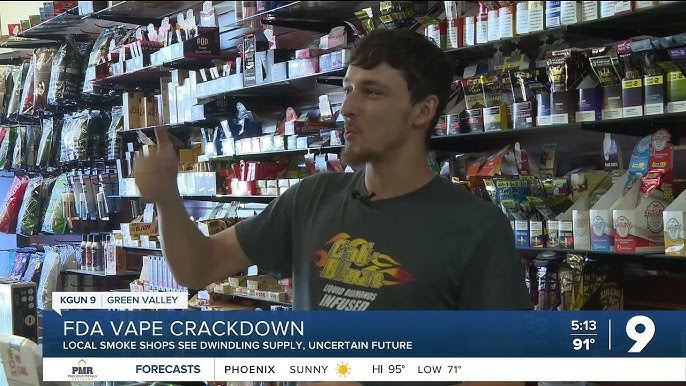
Local business owners have been vocal about the nerve-racking twists and turns of these regulatory developments. At establishments like Desert Smoke Shop in Green Valley, shop employees observe that increased prices and supply shortages are becoming inevitable outcomes of this crackdown. Long-standing partnerships with distributors seem to offer a temporary reprieve, but even those with secure access are not immune to an uncertain future.
Christopher Stewart, an employee at the shop, put it succinctly: “We have access to it and these other shops don’t, and having access during this time of complications is what’s causing the spike in prices.” His insights capture the essence of the local tension regarding the fluctuating availability of vape devices – businesses are on edge, uncertain if the wall of regulations will entirely cut off a key money maker.
Other local shops are pivoting their business strategies in response to supply issues. While some are moving towards more gift-oriented or souvenir items, many worry that the essence of their trade is being compromised. The rapid change in the vape market is forcing business owners to get into new product lines, even though vaping products have traditionally been their main source of income.
Economic Implications: Price Hikes, Supply Shortages, and Consumer Confidence
The immediate economic implications of the FDA’s action are visible on several fronts. First, there are price hikes. As the supply of authorized, FDA-approved vape devices contracts, local shops in Tucson and surrounding areas are forced to charge more. Customers from neighboring states have even begun traveling to areas like Green Valley, looking for products that seem to be disappearing from their home markets.
This spike in prices is but one facet of a broader economic puzzle. Other concerns include potential supply shortages that could cripple local businesses. For instance, if a particular supreme-selling product suddenly becomes off-limits, the financial stability of shops that rely heavily on vape sales may be severely strained.
- Rising prices due to limited legal supply
- Shortages of popular vape brands creating market strain
- Increased pressure on local distributors to secure FDA-approved products
- Potential shift in consumer behavior as customers seek alternatives
Regulatory Challenges: The Tricky Parts of FDA’s Pre-market Review
The FDA has historically relied on a system of premarket reviews for tobacco and vape devices. Only products that have successfully navigated – or rather, managed their way through – this process are allowed to be sold legally. Unfortunately, many disposable vape devices and flavored products have not gone through this rigorous process. As a result, these items are now uniquely vulnerable to enforcement actions, which creates an environment riddled with tension and loaded with issues.
From a legal perspective, the way that these products are classified, reviewed, and subsequently banned or allowed into the market is full of little details that many consumers and business owners find hard to digest. The tangled issues arising from fuzzy labeling practices and undervalued shipment declarations only add to the strain, making the enforcement environment seem even more intimidating.
A Table of Key Enforcement Actions and Their Market Effects
| Action | Description | Market Impact |
|---|---|---|
| FDA Warning Letters | Notices issued to manufacturers and importers of vape products that lack proper authorization | Businesses must re-evaluate their supply chain practices, leading to possible product delays |
| Civil Money Penalties | Fines imposed on companies found in violation of import regulations | Increased costs which may be passed on to local retailers and eventually consumers |
| Border Inspections and Seizures | Coordinated efforts by import and law enforcement agencies to stop unauthorized products at borders | Supply shortages and price hikes as legally compliant products become scarcer |
This table highlights the multifaceted nature of the crackdown. Each step in the chain – from warning letters, penalties, to border seizures – carries with it a set of economic and legal ripples that affect not only large manufacturers but also the small, local businesses reliant on steady product streams.
Local Business Perspectives: The Human Side Behind the Regulation
While the headlines often focus on the sweeping actions of federal agencies, it’s essential to get a closer look at how these measures affect local communities. Business owners like Ellen McBride and Ray Yurcik, co-owners of One Hit Wonders in Tucson, have raised alarm bells. Their shops, once thriving centers for vape products, now face an uphill battle to maintain inventory levels.
McBride points out that many distributors are already struggling to keep up with demand. “Sometimes I go to a distributor, and we have more vapes in our store than they do in their warehouse,” she remarked. Meanwhile, Yurcik is already taking steps to diversify his offerings, shifting towards souvenirs and gift items, which he believes might remain less affected by stringent regulations.
These accounts are emblematic of a broader sentiment across the local business scene. The sudden regulatory shifts force many to dig into alternative revenue streams, all while trying to balance customer expectations and their own survival in a market that feels full of problems.
Consumer Choices and the Future of Vape Shopping
The FDA’s crackdown has also left many consumers in a state of uncertainty. As the legal marketplace for vaping products shrinks, consumers are forced to decide: pay higher prices for limited legal products, or risk turning to alternatives that may not meet regulatory standards. In many ways, this dilemma captures the essence of a market that is full of tricky parts and complicated pieces.
For consumers, the challenges are not just financial but also deeply personal. Purchasing these products now involves weighing the potential risks and the legality of what is being offered. The fear of unknowingly purchasing an unapproved product, which may not have undergone proper quality checks, creates an overwhelming atmosphere that is hard to shake off.
Many consumers have voiced their concerns on social media and other public forums. Here are some of the sentiments gathered from community discussions:
- Frustration over rapid price increases on favorite vape brands
- Anxiety about the safety and quality of available alternatives
- Reluctance to visit local shops that may soon be unable to stock their products
- Uncertainty about the long-term implications of stringent regulations on personal choice
Legal Perspectives: Deciphering the Fine Points of the Enforcement Strategy
From a legal viewpoint, the FDA’s strategy represents both an effort to bolster public safety and a challenge to existing market structures. At its heart, this crackdown is about ensuring that all products sold meet a set of essential standards – standards that sometimes appear to have been overlooked in the rush to satisfy consumer demand.
However, the execution of these measures is filled with tricky parts. Many argue that the criteria used during the premarket review process are laden with confusing bits and subtle parts that can baffle even seasoned industry experts. The definition of an “authorized product” itself is often twisted by varying interpretations based on shipment classifications and import documentation.
Consequently, legal experts have found that the enforcement actions are not only about cutting off illegal products but also about sending a message. The core idea is that local businesses must be prepared to adjust swiftly to rapidly changing regulatory tides. Whether this approach ultimately benefits consumer safety or creates a market that is too nerve-wracking remains a topic for ongoing debate.
The Ripple Effects on Local Employment and Community Culture
Local vape shops are more than just retail outlets; they represent community hubs where customers come together, share experiences, and partake in an often misunderstood aspect of modern culture. When these shops face economic challenges, the effects ripple outwards, impacting local employment and community traditions.
Employees like those at Desert Smoke Shop or One Hit Wonders are now faced with a scenario where the sustainability of their jobs is tied to a regulatory framework that appears to be shifting rapidly. The short-term financial instability, combined with the nerve-racking uncertainty of future supply chains, puts many livelihoods on a precarious edge.
In communities where these businesses have thrived for years, the potential closures or forced pivots to non-vape products can cause a cultural loss. Regular customers, who once saw their local shops as reliable sources of both products and knowledge about vaping trends, may soon find that these familiar community spaces no longer exist in their current form.
Working Through the Legal and Economic Twists and Turns
For many small business owners, the current environment calls for a judicious mix of flexibility and caution. The task of finding your way through these regulatory shifts is laden with both opportunities and risks. To help those affected manage their way forward, here are a few strategies that have emerged from industry discussions:
- Diversification: Shops are increasingly exploring alternative product lines (such as gift items, branded merchandise, or CBD products approved under state law) to buffer against supply instability in vaping products.
- Strengthening Supplier Relationships: By deepening ties with trusted distributors, business owners can sometimes secure access to legal, FDA-approved products even during intensified enforcement periods.
- Community Engagement: Participating in local associations or business councils can foster a dialogue with regulators and other stakeholders, providing a platform to spotlight the unique local impacts of federal policies.
- Legal Consultation: Seeking professional advice on compliance can help businesses quickly steer through the confusing bits of new regulations and avoid legal pitfalls.
These approaches are essential for companies trying to figure a path in a market that is full of tricky parts, tangled issues, and nerve-racking twists and turns.
The Debate: Balancing Public Safety and Market Viability
At the heart of the FDA’s crackdown is an effort to safeguard public health by ensuring that only products which meet strict standards are available to consumers. There is little doubt that the agency’s role in protecting communities from potentially unsafe products is super important. Yet, critics argue that the current enforcement strategy may be overly aggressive, causing collateral damage to businesses that have long provided reliable products to consumers.
This debate is replete with subtle details. On one side is the argument that stricter enforcement is necessary to prevent harmful substances from entering the market. On the other side, there is concern that the enforcement is riddled with tension, placing small businesses in a position where they might lose their primary income source overnight.
As federal enforcement continues and additional shipments are seized – a phenomenon that has already reached over $115 million in seized products nationwide this year – the full impact on community retail and consumer choice remains to be seen. Many believe that an effective balance must be struck between protecting public safety and supporting the local economy. Otherwise, there is a risk that excessive regulation could choke off a sector that, while controversial, serves a significant population of consumers.
Comparative Perspectives: How Other Regions Are Managing the Crackdown
Looking beyond our local scene, it’s useful to take a closer look at how other regions are responding to similar regulatory pressures. In many states, local authorities have been compelled to work closely with federal counterparts to ensure that enforcement does not inadvertently damage legitimate businesses.
Some communities have instituted programs that help local businesses familiarize themselves with the new compliance requirements. In these areas, business owners receive training on the proper documentation procedures, alerting them to the common pitfall of undervalued shipments and misleading product descriptions.
A comparative table below illustrates a few measures taken in different regions:
| Region | Regulatory Support Measures | Market Outcome |
|---|---|---|
| Arizona (Local) |
|
Increased awareness and some stabilization of pricing |
| California |
|
Gradual balancing of market supply and stronger legal compliance |
| Florida |
|
Short-term supply shock but with longer-term stabilization efforts |
The measures taken in these regions illustrate that while federal enforcement may have uniform intentions, the local implementation and support mechanisms can vary considerably. For areas like ours, learning from these communities might be the key to mitigating negative economic impacts while still promoting public safety.
The Future of Vape Regulations: What Lies Ahead?
Looking forward, the future legal and economic landscape for vape products seems as tangled and unpredictable as ever. Stakeholders remain divided between those who believe that stringent regulation will eventually weed out unsafe products and those who fear that an overly aggressive approach could decimate a viable market segment.
Several key trends are emerging as experts and policymakers take a closer look at the current situation:
- Industry Adaptation: As enforcement continues, many businesses are expected to dig into alternative product lines or adopt innovative business models that can operate within the strict boundaries set by the FDA.
- Legislative Reevaluation: Some lawmakers are expected to revisit existing regulations, weighing the need for consumer protection against the economic fallout for local businesses.
- Technological Advances: Future developments in tracking and inventory management may help businesses better comply with regulations, potentially easing some of the administrative burdens currently faced.
- Consumer Shifts: With increasing public awareness of product safety, consumers may begin to prioritize authenticity and compliance over convenience and price, impacting market dynamics significantly.
These trends suggest that while the current environment may feel overwhelming, it also holds the promise of a market that, in time, could become more stable and secure for both consumers and businesses. The key will be for local shops to adapt quickly, establish stronger ties with compliant distributors, and continually steer through the confusing bits of regulatory changes.
The Legal and Ethical Balance in a Nerve-Racking Environment
Underlying all the business and economic discussions is an ethical debate: how do regulators maintain a balance between enforcing strict safety standards and respecting the operational needs of small businesses? The answer is not simple, as it entails digging into the fine points of a legal framework that is constantly evolving.
While federal regulators have a duty to protect public safety, there is also a social responsibility to ensure that local economies do not collapse under the weight of heavy-handed enforcement. Finding your way through these legal and ethical labyrinths is a challenge for everyone involved – from lawmakers and enforcement agencies to small business owners and consumers.
This dual responsibility raises several key questions:
- How can regulatory bodies ensure product safety without triggering unintended economic hardships?
- What measures can be implemented at a local level to support businesses impacted by modern enforcement tactics?
- What is the role of consumer choice when the market is constrained by legal twists and turns?
The answer may lie in a more collaborative framework, one where regulators, business owners, and consumer groups work together to sort out the tangled issues. As stakeholders continue to get into discussions about the best path forward, it becomes clear that this is a multi-dimensional problem requiring a multi-faceted solution.
Conclusion: A Community at a Crossroads
In wrapping up this discussion, it is essential to recognize that the current crackdown on vape products represents more than just a regulatory adjustment. For local communities, it is a moment of uncertainty, a time when longstanding business models are being forced to adapt to an environment that is as off-putting as it is full of challenges.
Local vape shops have served as gathering places and community hubs, places where enthusiasts and casual users alike could find a diverse range of products and engage in meaningful exchange. As these establishments confront skyrocketing prices, supply shortages, and a shifting legal landscape, they stand at a crossroads – one path leading to inevitable closure or forced reinvention, the other to a more resilient, regulated future that benefits public safety without sacrificing livelihoods.
Ultimately, the debate over the federal vape crackdown is not one of black and white. It is a story of subtle details, little twists, and the complex interplay between public safety and market freedom. Whether you align with the regulatory side or empathize with the struggles of small business owners, there is a shared interest in finding a balanced way forward – one that allows local communities to thrive even in the midst of nerve-racking regulatory shifts.
For the time being, the conversation continues. As stakeholders take a closer look at these developments, it becomes a must-have priority to provide supportive measures for those caught in the crossfire. In this intricate time of change, every effort made to ease the transitions, educate small businesses about compliance, and foster dialogue between regulators and retailers is a step toward a more stable, secure market in the long run.
In summation, the ongoing vape crackdown provides us with a real-world example of how federal enforcement, economic pressures, and community resilience interact in a complex modern marketplace. It reminds us that while changes in the regulatory environment can be overwhelming and full of tricky parts, cooperation and transparent dialogue offer the best hope for addressing both public safety concerns and the needs of local communities. The coming months and years will undoubtedly reveal whether these measures lead to a safer, more legally compliant market or result in further unintended consequences for consumers and business owners alike.
As citizens and stakeholders, it is incumbent upon us to remain engaged, ask the right questions, and support initiatives that balance strict legal standards with the vibrancy and vitality of our local economies. Only through collaboration and understanding can we hope to steer through these taxing, problematic twists and turns and create a future that holds promise for everyone involved.
Originally Post From https://www.kgun9.com/news/community-inspired-journalism/sahuarita-and-green-valley-news/getting-the-vapors-fda-crackdown-puts-local-vape-shops-on-edge
Read more about this topic at
Federal Government Increases Crackdown on Illegal Sale …
FDA head warns of illegal vaping products from China