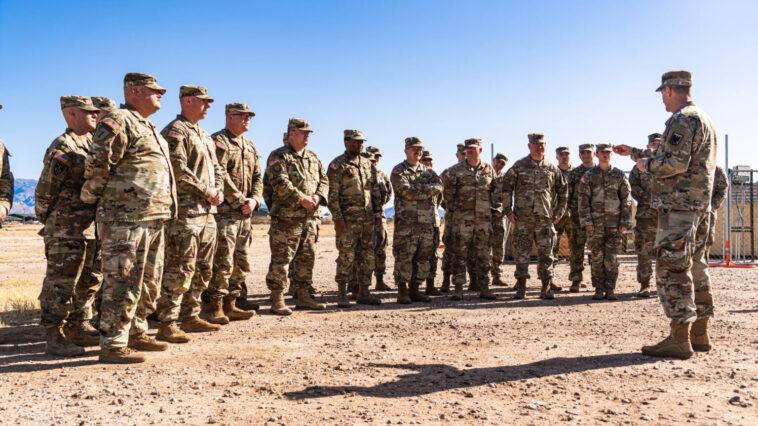

Arizona Attorney General Kris Mayes and the National Guard Deployment Debate
The recent legal challenges over the deployment of National Guard troops in Washington, D.C. have sparked passionate debate among legal experts, policy makers, and the general public. Arizona Attorney General Kris Mayes has joined 22 other states in contesting what many view as a risky use of military power for domestic law enforcement purposes. Her decision to file an amicus brief in support of the District of Columbia’s lawsuit reflects concerns about the potential misuse of military assets and the dangerous precedent it may set for community policing.
In this opinion piece, we will take a closer look at the arguments set forth by Mayes and her coalition, explore the legal terrain behind the deployment, and discuss the possible repercussions for the delicate balance between civilian and military authority in the United States.
The Background of the National Guard Deployment Controversy
At the heart of this issue is a lawsuit filed by D.C. Attorney Brian Schwalb, which argues that the administration’s decision to deploy National Guard troops in Washington, D.C. is not only an overstep of executive power but also tantamount to an illegal use of military forces for domestic law enforcement. The case contends that such actions disrupt the state’s control over its local affairs and could endanger both citizens and the troops involved.
Attorney General Kris Mayes has publicly maintained that armed soldiers should not govern civilian life on American soil. Emphasizing that “armed soldiers should not be policing American citizens on American soil,” Mayes aligns herself with the growing coalition of state attorneys general who believe that the deployment is not only unlawful and unconstitutional, but also poses serious practical and ethical complications.
Legal Foundations and Constitutional Challenges
At the core of this legal battle are several constitutional principles that have long guided the separation of powers in the United States. A key argument is that the use of the military for routine law enforcement activities undermines the constitutional balance established by the framers. The coalition of attorneys general argues that the deployment violates the Federal Government’s prescribed limits on its powers, particularly the absence of a broad “general police power” at the federal level.
This dispute raises several tricky parts when trying to interpret and apply constitutional provisions. The legal briefs argue that using National Guard troops in local law enforcement roles introduces complicated pieces into the public security equation. Without proper training in criminal procedure, civil rights, criminal investigation, and de-escalation techniques, these troops may inadvertently escalate rather than defuse tense situations.
Constitutional Limits on Military Use in Domestic Settings
The Constitution clearly establishes a system of limited, enumerated powers for the federal government. Unlike state and local governments, which are granted general police power to protect and serve their communities, the federal government does not have the authority to deploy military forces for local law enforcement. This legal separation is designed to prevent conflicts of interest and ensure that military resources are available primarily for defense rather than everyday policing.
The amicus brief submitted by Mayes and the other state attorneys general contends that the president’s decision to use National Guard units in Washington, D.C. represents an unconstitutional overreach. They ask the District Court for a preliminary injunction to clarify that soldiers should remain out of local law enforcement responsibilities, a stance that is rooted in long-standing constitutional directives.
Supporting Arguments from States Across the Nation
- The deployment of the National Guard without the consent of local governments is seen as a dangerous infringement on state sovereignty.
- Using military forces domestically could upset the proper balance between civilian leadership and military execution, leading to a slippery slope of future overreach.
- There is a real concern about the readiness of these troops to engage in civilian law enforcement given their limited training in the critical fine points of community policing.
These points have found resonance among several states, including California, which faced similar challenges during the protests in Los Angeles earlier this year. When California’s National Guard was deployed amid widespread unrest, legal challenges were promptly raised by its state officials, stressing that these measures should not extend to other locales without proper judicial scrutiny.
Assessing the Risks: Practical and Ethical Considerations
If one digs into the potential consequences of using military forces for law enforcement, the concerns are both practical and ethical. One major worry is that in a situation where soldiers are tasked with policing civilians, the absence of a police culture and appropriate training can lead to dangerous outcomes. With an already tense relationship between law enforcement and various communities, adding soldiers to the mix might exacerbate an already delicate scenario.
Similarly, there are several nerve-racking outcomes to consider. For starters, the reliance on National Guard troops for local security functions may erode the established trust between citizens and their local police. It may also create a dependency that could undermine community-based approaches to public safety. Moreover, this approach risks blurring the lines between state and federal powers in ways that could have long-term consequences for the rule of law and democratic governance.
The Impact of Military Involvement on Community Safety
One must consider the subtle parts of what it means to involve military personnel in civil affairs. Unlike trained police officers, National Guard soldiers are not typically equipped to handle the little twists that arise in civilian disputes. Their training is geared more towards combat and disaster response rather than nuanced law enforcement, which requires an understanding of local customs, relationship building, and non-violent de-escalation techniques.
Furthermore, the introduction of military forces could complicate existing community dynamics. Instead of fostering an environment of safety and confidence, the presence of armed soldiers might instill fear and uncertainty among residents. This concern is central to the arguments raised by Attorney General Mayes and her fellow state officials.
Historical Context: Precedents and Lessons Learned
Looking back at previous instances when the military was involved in domestic issues, one finds numerous examples that serve as cautionary tales. The intervention of armed forces in areas of civil strife has often led to unintended consequences. For instance, during periods of intense civil unrest in the past, the use of military units for law enforcement purposes has sometimes resulted in heightened tensions and even violence.
These historical episodes remind us that while the use of military forces may provide a quick fix in times of emergency, it often comes with tangled issues that linger long after the immediate crisis has passed. The experiences of states like California contribute a critical perspective to the current debate, underscoring that military intervention in local affairs remains a risky—and in some circumstances, counterproductive—measure.
Lessons from California’s Experience
California’s confrontation with the challenges of military involvement during times of protest offers several key takeaways that are relevant to the situation in Washington, D.C. Here are some of the little details gleaned from those experiences:
| Issue | Observed Problem |
|---|---|
| Training and Preparedness | National Guard troops, though well-versed in combat, were not adequately equipped to handle the intricacies of civilian law enforcement. |
| Community Response | The presence of soldiers increased community anxiety, leading to a climate of fear rather than reassurance. |
| Legal Boundaries | There were clear tensions regarding the legality of deploying military units without direct oversight from local authorities. |
These lessons highlight the importance of carefully considering the appropriate role for military forces in domestic settings. They also reinforce the argument made by Kris Mayes and her colleagues that any such deployment should be thoughtfully scrutinized, particularly when it undermines the established legal framework protecting local jurisdictions.
Understanding the Broader Implications for Democratic Governance
Beyond the immediate legal challenges, the deployment of National Guard troops for local law enforcement has broader implications for democratic governance and civil liberties. The situation is loaded with issues related to state versus federal authority, the safeguarding of constitutional rights, and the potential erosion of trust between government institutions and the citizens they serve.
The coalition of 23 states that have supported the call for a judicial review of the deployment underlines just how widespread and critical these concerns are. The argument articulated in the amicus brief stresses that this action is not an isolated incident but part of a broader trend that, if left unchecked, could lead to an unsettling shift in the balance of power in the United States.
Balancing Security and Civil Liberties
The debate over the National Guard’s role in domestic law enforcement is not simply one of legal theory—it is deeply intertwined with questions about how best to protect the safety and rights of citizens. On one hand, the government must be ready to respond effectively in times of crisis. On the other hand, the tools it employs must be appropriate and in keeping with the rule of law.
Here are several key factors to weigh when considering this balance:
- Authority: Ensuring that any use of military power is supported by clear, constitutional authority is super important to prevent overreach.
- Accountability: There should be robust systems in place to hold those deploying military resources accountable, protecting civilian rights in the process.
- Community Trust: The success of any security measure depends greatly on how well it is received by the local community, which in turn relies on clear communication and mutual trust between citizens and authorities.
In this context, the decision by Attorney General Mayes to challenge the deployment is an effort to protect the delicate fabric of democratic governance. It is a call to ensure that every citizen’s rights are safeguarded and that military resources remain reserved for their designated purposes.
Potential Long-Term Consequences of Military Overreach
One of the major concerns raised by the coalition is that the deployment in Washington, D.C. might merely be the beginning of a trend toward increased military intervention in local affairs. Critics argue that once the door is opened for the military to assist or replace local law enforcement functions, it could set a precedent for future actions that might further blur the boundaries between state and federal responsibilities.
There is a very real fear that such a development could slowly erode the trust the public places in its elected officials, thereby making the challenges of collaborating with citizens and understanding local needs far more complicated. The potential for creating a perpetual state of emergency is a slippery slope—one where temporary measures become permanent fixtures in governance.
Concerns About Mission Creep
Mission creep is one of the intuitive dangers associated with using the military in a domestic context. Originally, National Guard units are conceptualized primarily as support forces during national emergencies, such as natural disasters or large-scale security threats. Their deployment for routine law enforcement purposes, however, represents a significant expansion of their typical role.
This change carries with it several problematic dimensions:
- It can create confusion over the designated roles of military personnel versus local law enforcement officers.
- It may lead local governments to become overly reliant on federal resources that are not intended for day-to-day community safety.
- It introduces a range of unexpected operational challenges, such as miscommunication, unclear chains of command, and difficulties in aligning standard policing protocols with military procedures.
The concerns about these twisted issues underscore why legal experts and state officials are pushing back against the current deployment model in Washington, D.C. Ensuring clear lines of authority and a proper balance of power is fundamental to protecting both public safety and democratic norms.
The Role of the Judiciary in Upholding Constitutional Limits
At the center of the current legal dispute is the role that courts must play in defining and upholding the constitutional limits of governmental power. The request for a preliminary injunction by the coalition of attorneys general asks the judiciary to reaffirm that soldiers should not be utilized for local law enforcement roles. This is a call for judicial oversight, ensuring that executive actions remain within the boundaries set forth by the Constitution.
Legal observers note that the situation is filled with tricky parts that demand careful judicial scrutiny. The role of the courts in interpreting constitutional provisions is key to resolving the tangled issues that arise when military and civilian roles intersect. The ability of the judiciary to assert its authority in such matters will play a critical role in shaping the future use of military resources at the local level.
Judicial Precedents and Their Influence
The legal reasoning behind the challenge to the National Guard deployment is heavily influenced by judicial precedents. In past rulings, courts have consistently underscored that the federal government’s authority is limited to powers explicitly granted by the Constitution. When these boundaries are breached, it falls to the judiciary to step in and correct the imbalance.
In this case, the coalition’s appeal is grounded in the notion that local governments must have the right to exercise their key authority over public safety without interference from federal military forces. The case also brings into focus the constitutional principle that civilian law enforcement should remain free from military involvement unless absolutely necessary, as defined under narrow, clearly articulated circumstances. This stance is supported by a long line of legal opinions that collectively contribute to our understanding of the proper division of power.
The Public Perception and Political Climate
Public opinion surrounding the National Guard’s deployment in Washington, D.C. is mixed, with a notable faction of citizens expressing concern about the implications for civil liberties and local control. Many worry that this approach sets a dangerous precedent, which could lead to further encroachments on the rights and freedoms of everyday Americans.
In this charged political environment, opinions are often divided along partisan lines. However, the legal issues at stake transcend political disagreements, touching on full-of-problems issues of law and governance that affect all citizens regardless of party affiliation. The focus, as emphasized by attorneys general like Kris Mayes, remains on ensuring that the government’s actions do not undermine constitutional freedoms and that the use of military force is strictly limited to its intended scope.
Community Concerns and Citizen Voice
The reaction from local communities has also been a significant component of this debate. Many citizens feel overwhelmed by the potential for a military presence in their daily lives, fearing that it could lead to a cycle of increased policing and reduced civil liberties. Community groups and civil rights advocates have voiced their support for judicial intervention, urging a return to methods that respect both state authority and the rule of law.
Key concerns from the public center around the following points:
- The potential for abuse of power when military personnel, who are not fully trained for civilian law enforcement, are inserted into everyday policing roles.
- The erosion of trust between local law enforcement and the communities they serve, which can lead to diminished cooperation and increased tension.
- A broader fear that such deployments could gradually expand into scenarios beyond emergency response, thereby permanently altering the landscape of civil liberties.
Public sentiment appears to reflect a desire for solutions that are both effective and respectful of the established frameworks that safeguard democratic principles. Critics argue that, instead of resorting to military deployments, officials should explore more community-focused policing strategies that support local law enforcement while upholding constitutional guarantees.
Future Implications and the Need for Institutional Checks
The discussion around National Guard deployments in domestic settings is unlikely to fade away in the near future. For many, this legal challenge is a pivotal moment—a test of the nation’s commitment to the constitutional division of power. The outcome of this lawsuit could establish critical guidelines for how similar situations are handled in the future and serve as an important reminder of the need to maintain clearly defined boundaries between military and civilian functions.
There are several near-term and long-term implications that deserve further investigation, including:
- Policy Revisions: The outcome of this legal battle could prompt a re-examination of policies governing the use of military forces in domestic situations. Lawmakers might be required to draft clearer guidelines that inhibit any nerve-racking overreach in the future.
- Training and Preparedness: Should military involvement in civil matters continue, there will be an urgent need to better prepare these troops for the challenging bits of civilian law enforcement by enhancing training protocols that emphasize de-escalation and civil rights.
- Judicial Oversight: Strengthening judicial oversight mechanisms is essential to ensure that executive actions remain within the prescribed limits of the law. Judicial checks on administrative decisions serve as a safeguard against the potential expansion of federal power at the expense of local autonomy.
By taking a closer look at these dimensions, we can appreciate that the legal debates occurring today are not isolated incidents but part of a larger struggle to preserve the integrity of America’s constitutional framework. It means ensuring that the tools of national defense are not misapplied to manage our daily social affairs—an area that deserves as much care and scrutiny as any military operation.
Institutional Checks and Balances in Action
A successful resolution to these legal challenges will require that all branches of government work together to find effective ways to manage domestic security without undermining constitutional limits. This is not merely about opposing a single executive order or a brief; it is about implementing a system of checks and balances that can steer through tangled issues of power and responsibility.
For instance, state attorneys general, local officials, and federal courts must collaborate to form a cohesive framework. Such cooperation will help figure a path that respects both the necessity for robust security measures and the crucial need to protect civil liberties. The effectiveness of our democratic institutions depends on striking this balance, a process that will undoubtedly involve sorting out many of the inconvenient details that arise when military and civilian roles intersect.
Conclusion: Charting a Course Toward a More Balanced Future
The legal contest over the deployment of National Guard troops in Washington, D.C. raises numerous thought-provoking issues. From constitutional limits on federal power to the practical and ethical dilemmas of mixing military and civilian roles, the matter is replete with twists and turns that demand careful scrutiny.
Arizona Attorney General Kris Mayes’ decision to join the coalition of state attorneys general reflects a deep-seated commitment to preserving the delicate balance between state authority and federal reach. By challenging the administration’s actions in court, these legal leaders seek to prevent what they see as a slippery slope toward an overextended military presence in our daily lives—a trend that, if allowed to continue unchecked, could imperil the principles of democratic governance and civil liberty.
As this controversy unfolds, it is clear that the coming months and years will serve as a critical period for reevaluating how best to ensure public safety while safeguarding the freedoms enshrined by our founding documents. The ultimate decision of the courts will not only decide the fate of a singular deployment but will also send a powerful message about the role of the military and the boundaries of executive power in a free society.
In an era marked by rapid political changes and unprecedented challenges, the importance of maintaining a clear demarcation between military authority and local law enforcement cannot be understated. Legal battles, such as the one spearheaded by Kris Mayes and her coalition, remind us that the rule of law is a dynamic, living principle—one that must continually be defended against overreach and misinterpretation. In doing so, we preserve not only our legal heritage but also the very fabric of an open and democratic society.
As this debate rages on in legal circles and on the streets alike, one cannot help but reflect on the lessons of history, the warnings embedded in our constitutional texts, and the need for a future where security measures are both effective and respectful of the civic freedoms we hold dear. It is a reminder to all of us—citizens, lawmakers, and soldiers alike—that protecting democracy is an ongoing, collaborative effort requiring vigilance, careful thought, and, ultimately, a commitment to upholding the values that define our nation.
Only by confronting and addressing these challenging issues head-on can we hope to build a future that honors the spirit of our founding documents while adapting to the evolving needs of modern American society.
Originally Post From https://www.kold.com/2025/09/16/arizona-ag-joins-coalition-against-deployment-national-guard-washington-dc/
Read more about this topic at
Law and Order or Overreach? When Soldiers Become …
We Must Resist Trump’s Military Takeover of Washington …