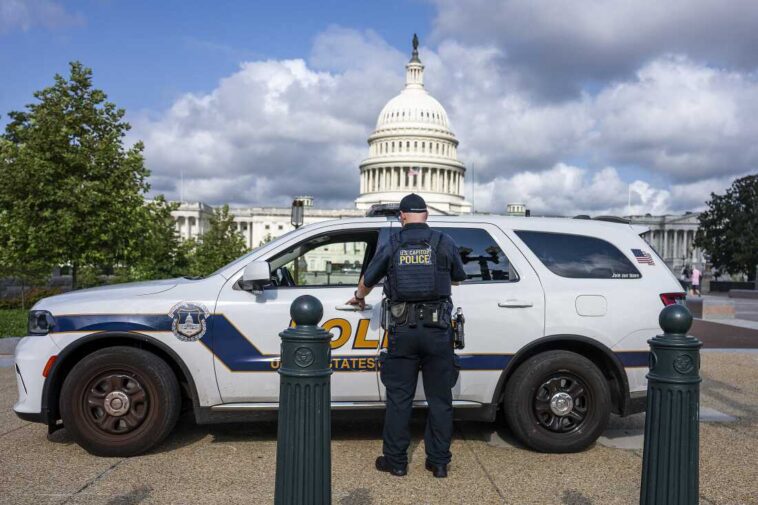
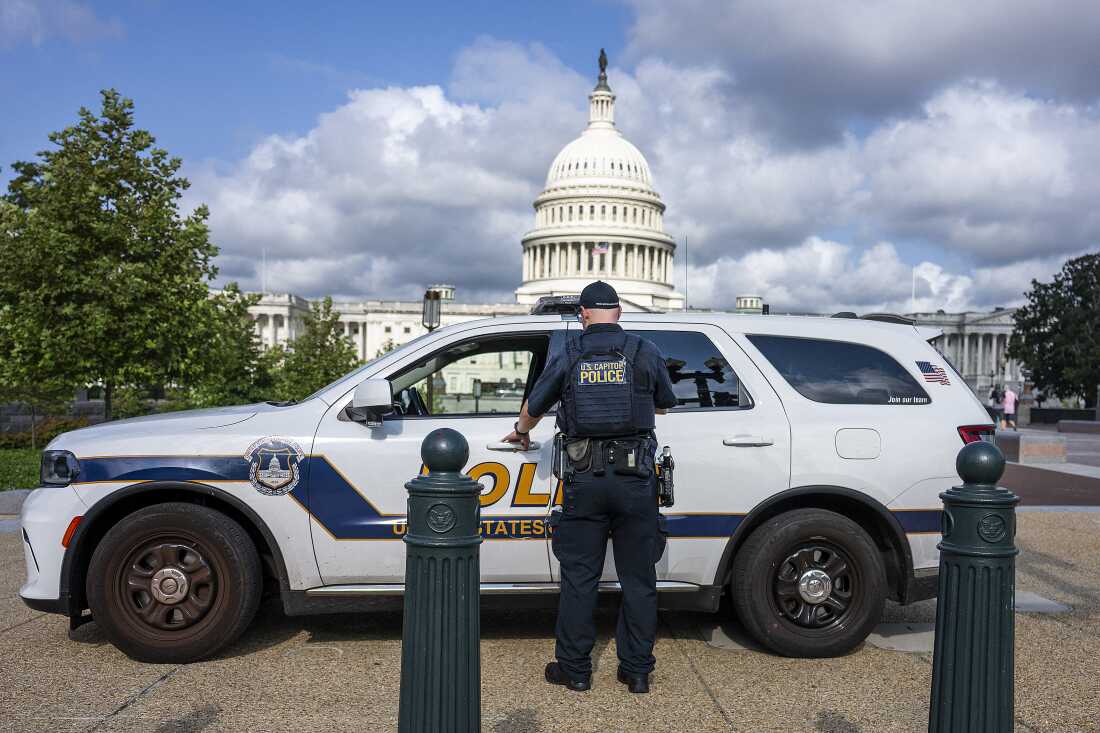
Washington’s Federal Takeover: A Closer Look at the City’s New Law Enforcement Push
Recent moves by the White House to boost federal law enforcement presence in Washington, D.C. have sparked heated debates on the balance of power, local autonomy, and public safety. In an era marked by tricky parts of political discourse and tangled issues of legal oversight, this order—linked to President Trump’s suggestions of commandeering the city—raises a number of small distinctions and subtle details that merit an in-depth exploration.
The increased deployment of federal forces, which began shortly after midnight on a recent Thursday, is being promoted as the answer to a problem that many claim has left the nation’s capital feeling unsafe. However, as we dig into the motivations, legal implications, and the true impact on both local and federal law enforcement, we find that the situation is laden with tension and full of problems that need to be carefully addressed.
Federal Involvement: The Basics and Beyond
The move to bolster law enforcement in Washington comes after a series of incidents that critics argue illustrate the confusing bits of public safety management in the capital. President Trump’s administration insists that by flooding the streets with federal agents—including personnel from the U.S. Capitol Police, Homeland Security Investigations, and various other federal agencies—Washington will be “made safe again.” This dramatic language underscores the administration’s belief that only a robust federal presence can properly tackle the city’s escalating crime rates.
In a public statement, White House press secretary Karoline Leavitt remarked, “Washington, D.C. is an amazing city, but it has been plagued by violent crime for far too long.” The president has repeatedly hinted at the idea that the responsibility for managing D.C. should be handed over to federal authorities. This proposition, however, involves controversial and complicated pieces of legal reform, particularly the potential repeal of the Home Rule Act of 1973—a move that demands congressional action and is loaded with political risks.
This debate over local versus federal control is not simply a matter of policing strategy. It delves deep into the fine points of constitutional law and administrative authority, provoking worries about the potential erosion of local voice and agency. As federal law enforcement units are deployed, the lack of visible changes in the overwhelming presence expected from a recently announced multi-agency operation contributes to the public’s nervous skepticism.
Legal Hurdles and the Home Rule Act Debate
One of the most nerve-racking aspects of this development is the legal debate over deforming the current governance structure of Washington. The Home Rule Act, which provides the city with an essential degree of self-governance, is at the heart of this conflict. President Trump’s suggestions to change this long-standing arrangement have triggered immediate concerns among legal scholars and city officials alike.
The proposal to repeal or modify the Home Rule Act elevates the discussion to a level brimming with fine points and subtle parts that are not easily untangled. Critics argue that such a change could set a concerning precedent, implying that local governments may be stripped of their power if they fall short of federal expectations. This possibility is viewed by many as a dangerous slippery slope, where the balance of power could shift in favor of a central authority supplanting local decision-making.
For clarity, a table outlining the stakeholders, their roles, and concerns is provided below:
| Stakeholder | Role | Key Concerns |
|---|---|---|
| Federal Government | Deploying law enforcement, setting nationwide security protocols | Ensuring stability, maintaining control during crises |
| Local Government (D.C.) | Managing day-to-day city affairs and local policing | Preserving local autonomy, protecting community interests |
| Court System | Interpreting legal challenges arising from jurisdictional disputes | Maintaining constitutional principles, ensuring checks and balances |
| City Residents | Experiencing day-to-day public safety policies | Community trust, fair and effective law enforcement |
This table helps figure a path through the tangled issues, clearly showing how different groups are affected by a decision of such national import.
Assessing the Visible Impact on the Streets
The promise of an overwhelming, multi-agency federal law enforcement presence has not always matched the reality on the ground. Observers who took a closer look on the early hours of a Friday reported that aside from the familiar face of the local Metropolitan Police Department, the conspicuous influx of marked federal units was noticeably absent.
This discrepancy highlights a few of the small distinctions and subtle details that shape the public’s perception of the policy. While the federal deployment was aimed at making a dramatic statement of “no safe harbor for violent criminals,” the practical outcome seemed less dramatic, sparking questions such as:
- Were the federal agencies strategically deployed or simply stationed as a symbolic gesture?
- How will this initiative integrate with existing local law enforcement operations?
- Can the public genuinely feel safer if the visible presence of police remains unchanged?
These questions suggest that while the policy might appear reassuring on paper, its real-world implementation faces challenges in delivering the intended message of safety and control. Given the public’s skepticism, the need to find your way through the twists and turns of policy implementation is more important than ever.
Political Tension and Public Sentiment
The politically charged nature of this federal intervention has left the city’s residents divided. President Trump’s bold language—claiming that failing local efforts will result in a complete federal takeover of Washington—resonates strongly with some voters while appearing overly aggressive to others.
Critics argue that using such language, capable of inciting an intense reaction, distracts from the underlying issues of criminal activity and fragmented governance. They caution that conflating tough policing measures with a hostile takeover of local governance is both misleading and potentially counterproductive. The risks include not only legal battles over the limits of executive power but also a growing mistrust between local inhabitants and governmental authorities.
This division is emblematic of the fine shades present in public policy, where every decision carries minute implications that might affect the voices of everyday residents. As the nation grapples with the question of policing effectiveness versus autonomy, a series of bullet points can help clarify the core concerns:
- The promise of increased federal control versus the reality on the street level
- The legal and constitutional implications surrounding the Home Rule Act
- The potential erosion of public trust in both local and federal institutions
- The threat of political overreach in addressing legitimate public safety concerns
It becomes clear that any successful approach must address both the nerve-racking safety concerns and the tangled legal and constitutional issues at play.
The Assault Incident and the Push for Action
At the center of this debate is the triggering event that provided the impetus for the White House’s decision: a recent assault on a high-profile member of a federal agency known for its efforts to trim bureaucracy. The attack on Edward Coristine—known colloquially by his nickname “Big Balls”—by a gang of teenagers not only shocked the public but also catalyzed political momentum toward a harder stance on crime.
This assault, which occurred during an attempted carjacking, exposed the scary potential of unbridled criminal activity in a major city. The immediate arrests of two teenagers, along with the ongoing search for additional culprits, signal that federal forces are keen to project an image of zero tolerance. Yet, this rapid mobilization also raises questions about overreaction and the possibility of misdirected priorities.
Supporters of the new policy argue that such high-profile incidents justify an immediate and comprehensive federal response. They see this as an essential—if aggressive—step in sending a clear message to those who would commit crimes in or around the nation’s capital. Critics, however, caution that such measures could lead to a slippery slope where any lapse in local public safety might be used as a pretext for federal overreach in the future.
By poking around the fine points of this policy decision, we see that it is as much a question of legal jurisdiction as it is of effective crime control. Fundamentally, the debate underlines the need for a measured approach that aims to secure public safety without unduly undermining local governance.
The Role of Multiple Agencies: A Cooperation or a Collision?
The announcement highlighted that the increased presence would involve several federal agencies, each playing a distinct role in ensuring Washington’s security. Among those mentioned are personnel from the U.S. Capitol Police, Homeland Security Investigations, the Federal Protective Service, the Drug Enforcement Administration, the Bureau of Alcohol, Tobacco, Firearms and Explosives, the U.S. Marshals Service, and even agencies supporting transportation security like Amtrak’s police force.
While the intention is to create a united front, the integration of multiple agencies can be laden with tricky parts. The operational protocols of local and federal law enforcement often differ, and coordinating between them demands that all parties find your way through the intricate layers of jurisdiction and command structure. Consider the following table that clarifies the responsibilities associated with each group:
| Agency | Main Responsibility | Potential Overlap With Local Forces |
|---|---|---|
| U.S. Capitol Police | Security of federal legislative buildings | Coordination during events in national spaces |
| Homeland Security Investigations | Countering national security threats | Inter-agency collaboration during terror alerts |
| Federal Protective Service | Safeguarding federal facilities | Supporting local security at designated sites |
| DEA and ATF | Combatting drug trafficking, firearms offenses, and related crimes | Working jointly on cross-jurisdictional criminal cases |
| U.S. Marshals | Judicial security and fugitive operations | Back-up roles in high-risk operations |
This breakdown illuminates how the layers of federal intervention can either complement or confuse ongoing local operations. The risk, as pointed out by several legal experts, is that overlapping authority can create nerve-racking situations if a clear chain of command is not maintained.
Community Impact and the Public’s Reaction
The public’s reaction to the sudden spike in federal presence has been mixed. For many residents, the federal initiative is seen as a welcome reinforcement—a much-needed measure in a city that has experienced a significant increase in violent crime and carjackings over the past few years. They appreciate the message that law enforcement is intensifying its efforts, and some feel that a stronger hand at the helm might curb the rising tide of criminal activities.
However, a second group voices concerns about the imposition of federal control on a city that prides itself on local democracy and community-based policymaking. Critics worry that the federal intervention might overshadow the delicate balance achieved through local governance. They argue that once federal authorities extend their influence in Washington, the ripple effects could extend to communities across the nation, undermining their ability to manage local issues independently.
This schism can be further understood through the following bullet list of community sentiments:
- Support for increased safety: Many believe that a tough federal stance will deter future criminal behavior.
- Fear of eroded local culture: Others worry that local traditions and community input may become secondary to federal directives.
- Concerns over accountability: There is unease about being governed by agencies that might not be as responsive to the specific needs of Washington’s diverse neighborhoods.
- Calls for transparency: Residents are demanding clearer information on how such policies will be implemented and measured for success.
These community concerns are not mere background noise but a critical part of the debate itself. In any society where democratic ideals are held dear, initiatives that carry the risk of overshadowing local autonomy will always be met with both hope and apprehension.
Evaluating the Promises Versus the On-the-Ground Reality
An important point to consider is comparing the promises made by federal spokespersons with the actual conditions observed on the streets. The White House declared that the federal presence would be expansive and unmistakably visible—a symbolic effort to assure residents that violent criminals would soon find no safe haven in the capital. Yet, as one early morning tour revealed, the expected parade of marked federal vehicles and uniformed personnel has not been substantiated by the facts.
This disparity raises several tricky questions regarding the effectiveness of such measures:
- Is the federal deployment intended more as a psychological message than a tactical operation?
- Could the lack of visible changes spark further doubts about the efficiency of these policies?
- What are the real metrics by which success will be measured in this initiative?
These concerns mirror the broader public sentiment: when safety measures are introduced, they must be tangible. Otherwise, the psychological impact may fall short of the intended effect. The issue remains that without clear, observable improvements in public safety, promises can easily be seen as mere political theater.
Political Overreach or Justified Response?
The debate over federal intervention in Washington is emblematic of the larger tussle between central authority and local independence. Supporters believe that when local governments waver on issues of public safety, federal agencies must step in to fill the void. They argue that the capital, as the seat of national power, cannot afford to be vulnerable to lapses in security—especially if those lapses might invite further criminal activity or even serve as a spark for civil unrest.
Opponents counter that this approach is a form of political overreach, one that dangerously expands federal authority at the expense of self-governance. They caution that such actions could set a precedent for future administrations to interfere in local matters under the guise of public safety. In essence, what starts as a response to immediate threats could eventually evolve into a permanent restructuring of local governance.
This debate has several key points, summarized below:
- Supporters’ stance: Federal intervention is a critical and timely response to rising crime, providing a necessary boost where local systems may fall short.
- Opponents’ view: The threat of a federal takeover undermines the hard-won autonomy of Washington’s residents and could lead to a dangerous concentration of power.
- Broader implications: The decision represents a litmus test for the relationship between federal agencies and local governments in a modern democratic society.
Thus, what might appear as a straightforward security measure is, in reality, intertwined with deeper political and constitutional questions.
Interagency Collaboration: The Benefits and the Bumps
In theory, a coordinated effort between federal and local police forces is a logical step when confronting severe security challenges. The idea is to complement local expertise with the extensive resources and capabilities of federal agencies, thereby creating a seamless safety net for the city’s residents. However, the reality of such integration is far from simple and often faces a few intimidating and confusing bits of implementation.
For instance, different agencies operate under distinct protocols and chains of command. When conflicts arise between local law enforcement and federal bodies, figuring a path to smooth collaboration can be a nerve-racking challenge. Some of the tricky parts include:
- Aligning operational procedures to prevent jurisdictional conflicts
- Ensuring a unified command structure during joint operations
- Balancing local knowledge with federal expertise in rapidly evolving scenarios
- Maintaining community trust when multiple agencies with different reputations are involved
These points illustrate the subtle parts of interagency cooperation that must be managed carefully. A failure to do so could lead to inefficient practices and even undermine the very goal of increased public safety.
Looking Ahead: Long-Term Implications for Local Governance
The current surge in federal presence in Washington serves as a flashpoint for a larger conversation about the role of local versus federal authority. While the immediate priority is clearly public safety, the longer-term consequences of potentially diluting local control could be far-reaching. Local governments are traditionally given the space to craft responses tailored to the unique needs of their communities, and the fear is that excessive federal involvement might stifle this autonomy.
Debates surrounding the potential repeal or reformation of the Home Rule Act illustrate these concerns vividly. Such a legislative overhaul would not only affect the operational dynamics of Washington, D.C., but might also send a signal to other cities across the nation. Some of the potential long-term implications include:
- Reduction in local decision-making: A shift in power could curb innovative, community-driven solutions to local problems.
- Increased bureaucratic overlap: Multiple layers of security management might lead to inefficiencies and miscommunications.
- Legal challenges: Changes in governance structures are likely to invite lawsuits and prolonged legal battles, further complicating the administrative landscape.
- Political polarization: As federal intervention becomes more visible, divisions between local residents and national policymakers could deepen.
It is clear that while federal measures might offer immediate relief or a reassuring show of strength, they also risk entangling Washington in a prolonged period of legal and political reconfiguration—a process that is inherently loaded with issues and unforeseen twists and turns.
Drawing Parallels: Historical Context and Future Outlook
This isn’t the first time that concerns over federal versus local control have come to the forefront in American history. Several episodes in the nation’s past underline the risks and rewards of central intervention. For example, during periods of national crisis or civil unrest, federal forces have historically stepped in to restore order when local authorities were overwhelmed. Each of these instances was marked by a series of small shades, subtle parts, and hidden complexities that shaped public opinion and legal precedents alike.
Today’s scenario in Washington, D.C. shares some similarities with those historical precedents, though it is not without its own unique challenges. The debate can be broken down into these critical considerations:
- The role of federal authority: When is it justified, and when does it overstep the bounds of local oversight?
- The importance of community input: How can the voices of local residents be preserved when sweeping federal measures are implemented?
- Checks and balances: What legal frameworks should be reinforced or reformed to ensure that neither level of government overreaches its powers?
Understanding these parallels allows us to appreciate the delicate balancing act that policymakers and law enforcement officials must perform. Only by working through these challenging issues—acknowledging both the essential contributions of federal agencies and the key role of local oversight—can any effective and lasting solution be identified.
Legal and Ethical Reflections on Federal Intervention
This era of increased federal intervention in Washington prompts not only practical questions regarding crime control but also deeper ethical and legal considerations. The idea of federal authorities stepping into roles traditionally managed by local entities calls for a careful look at the hidden complexities of constitutional authority, citizens’ rights, and the balance of power.
From a legal perspective, the potential repeal of the Home Rule Act raises a number of overwhelming and intimidating issues. Many legal experts are now taking a closer look at the delicate interplay between federal orders and established statutes. The concern is that without a clear and democratic mandate, such legal shifts may threaten the foundation of local governance—a principle that many argue is critical in preserving the spirit of American democracy.
Furthermore, ethical questions seep into the discussion. When federal entities assume control over local policing, issues of accountability inevitably come to the fore. Who gets to decide what methods are acceptable? How do we ensure that local demographics, each with their own small distinctions in needs, aren’t overlooked in favor of one-size-fits-all federal policies?
These legal and ethical questions are best understood by summarizing the main points with a bulleted list:
- Legal Accountability: Ensuring clear demarcation of power to avoid future jurisdictional clashes.
- Ethical Considerations: Balancing community needs with national security priorities.
- Constitutional Integrity: Upholding democratic values while adapting to modern security challenges.
- Transparency and Oversight: Maintaining public trust through open communication and clear guidelines.
These points remind us that the pathway forward must reconcile the urgent need for safety with the equally important imperative of protecting democratic principles and local rights.
Public Policy Proposals for a Balanced Approach
Given the current scenario, a balanced approach might be the most effective route to ensure both enhanced public safety and the preservation of local governance. A few proactive public policy proposals could help address the tense issues while avoiding the pitfalls of federal overreach. These proposals include:
- Enhanced Interagency Training: However, rather than imposing a top-down federal protocol, federal and local forces could engage in joint training sessions. This would help them work through overlapping responsibilities and figure a path to smoother collaboration.
- Clear Operational Protocols: Establishing unequivocal guidelines that detail when and how the federal authorities intervene in local matters can help reduce confusion and reassure communities that local autonomy remains intact.
- Regular Public Updates: Transparency is key. Regular updates from both federal and local law enforcement on performance metrics and future plans could boost public trust and curtail speculation.
- Legal Oversight Committee: Creating a bipartisan committee tasked with monitoring the interplay between federal agencies and local authorities may help maintain checks and balances. This body could evaluate the deployment’s legality and efficacy, as well as propose timely adjustments.
These policy strategies are not intended to diminish the role of federal agencies but rather to ensure that any collaboration with local forces is conducted in a manner that safeguards public safety without sacrificing local independence.
Conclusion: Striking a New Balance Between Safety and Autonomy
In conclusion, the increase in federal law enforcement presence in Washington, D.C. is as much a political statement as it is a public safety measure. President Trump’s suggestion of a full takeover of the capital’s governance, while dramatic, underscores an ever-present tension between the need for strong, centralized control in times of crisis and the equally important desire to maintain local autonomy and governance.
This policy initiative, while promising to stamp out violent crime and reassure citizens, comes entangled with legal, ethical, and political questions. The immediate fallout from the assault on Edward Coristine has provided a lightning rod for an already tense debate, leaving many to ponder the long-term repercussions on Washington’s local government and democratic processes.
As citizens and policymakers work through the tricky parts and hidden complexities of this unfolding scenario, it is clear that any path forward must honor both the imperative of public safety and the principle of local self-governance. In an era where even simple decisions are loaded with issues, the challenge remains to chart a course that respects the delicate interplay of federal oversight and local accountability.
Ultimately, the success of this federal intervention will depend on its execution and on the ability of all parties involved to manage their way through a maze of conflicting demands. The coming weeks and months will test the robustness of interagency cooperation, the resilience of local government, and the very foundations of public trust in law enforcement.
For now, Washington stands at a crossroads—a place where the decisions made today will determine the city’s legal and political landscape for years to come. Whether this new approach will lead to a future where citizens feel both protected and empowered remains to be seen. Local residents and national observers alike will undoubtedly keep a close watch as federal and local agencies take the wheel in steering through these challenging times.
In crafting public policy that both enhances safety and preserves constitutional rights, decision-makers must be prepared to navigate the overwhelming and often intimidating twists and turns of modern governance. It is a task that demands clear guidelines, consistent communication, and above all, a commitment to balancing the diverse needs of a vibrant, pulsing capital with the rigorous demands of federal security.
As we take a closer look at this evolving situation, one truth stands clear: the future of Washington, D.C.—and potentially that of other American cities—hinges on our ability to reconcile federal intervention with the cherished ideals of local autonomy and democratic governance. The steps taken today could very well shape the legacy of this defining period in American political life.
Originally Post From https://www.azfamily.com/2025/08/08/trump-orders-increased-federal-law-enforcement-presence-washington/
Read more about this topic at
Trump orders increased federal law enforcement in DC
Trump renews threats to take over Washington, D.C., but …