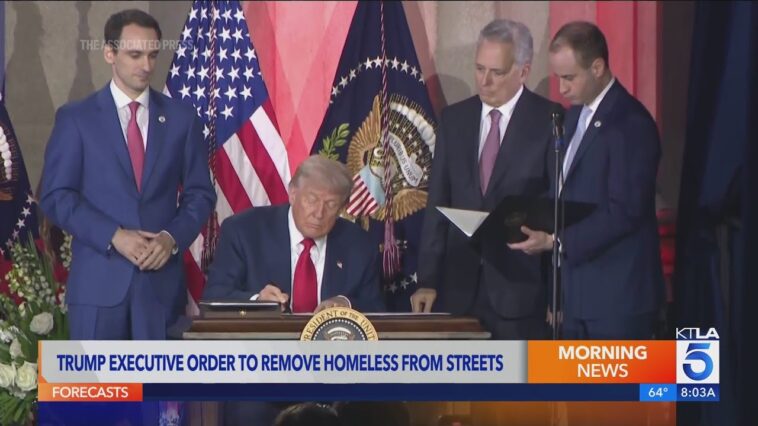

Assessing the Executive Order and Its Far-Reaching Implications
The recent executive order on homelessness issued by former President Donald Trump has ignited a heated debate across the nation. At its core, the order mandates that federal officials work with state and local governments to address open drug use and street camping. Proponents argue that this measure is a critical step toward restoring public order, while critics see it as an overly aggressive tactic that risks stripping vulnerable people of their rights by sending them into long-term institutional settings for mental health or drug treatment without their consent.
This opinion editorial takes a closer look at the order, its intentions, and the many tangled issues it presents. We will dig into the history behind policies to reduce visible homelessness, examine the practical challenges that cities face, and explore alternative strategies put forward by various local leaders. Through a careful look at the order’s ramifications, we can begin to understand both its potential benefits and the possible long-term complications.
Understanding the Intimidating Context of Homelessness
The problem of homelessness has grown significantly over recent years, especially as housing prices continue to soar and affordable options remain scarce. Many communities have witnessed an increase in street encampments fueled by a shortage of available housing and a rise in drug misuse, notably with the influx of cheap yet potent fentanyl. This complex issue is riddled with problems that touch on public safety, community well-being, and individual rights.
For many local governments, the decision to intervene in public spaces is not an easy one. The current policy debate is full of small distinctions between cordoning off an area for safety and ignoring the underlying causes of homelessness. Those charged with protecting the public must balance the need to provide a safe environment against the obligation to offer compassionate care to individuals in a difficult situation.
Historical Approaches Under Democratic Leadership
State leaders like California Governor Gavin Newsom and many Democratic mayors have long worked to address the street homelessness crisis. Their efforts include initiatives toward removing homeless encampments and providing greater access to drug rehabilitation and mental health services. Historically, measures in these states have ranged from shelter programs to comprehensive public health campaigns aimed at helping those in need through treatment rather than punishment.
In this debate, it is worth noting that city officials in liberal urban centers such as San Francisco, Los Angeles, and New York often emphasize the priority of treating homeless individuals with dignity and empathy. While some policies may be seen as inappropriate, these local governments have striven to solve the issue by working directly with homeless populations, offering shelter and housing support as opposed to forced removal.
Digging Into the Executive Order: Goals and Challenges
The executive order calls for a strategy of shifting homeless individuals from public spaces into long-term care facilities where they can supposedly receive the help they need. Officials argue this is the most proven way to restore public order; critics, however, warn that this approach oversimplifies the tricky parts of homelessness and could lead to what many consider a heavy-handed misuse of federal power.
Key features of the executive order include:
- Prioritizing funding to cities that enforce bans on open drug use and street camping.
- Advocating for the relocation of homeless individuals into institutional settings for treatment.
- Sending a clear message to urban centers that have historically maintained more lenient policies regarding encampments.
While officials on both sides of the debate agree that something must be done, the order is seen by many as a distraction—a way to create headlines and settle old scores rather than addressing the root causes of homelessness.
Comparing Policy Responses: A Table Overview
| Policy Response | Proponents’ View | Critics’ Concerns |
|---|---|---|
| Forced Institutionalization | Essential for restoring public order; proven approach | Loaded with issues; risks violating individual rights |
| Increased Funding for Enforcement | Key to cracking down on drug use and improving safety | May lead to punitive measures and worsen vulnerabilities |
| Enhanced City Clean-up Initiatives | Improves appearance and safety of public spaces | Fails to address the underlying housing shortages and health problems |
This table summarizes some of the fine points in the current policy debate. It is clear that while the intended outcomes of the executive order may appear superficially attractive to some, the approach is fraught with tension and potential pitfalls that could adversely affect some of the most vulnerable members of society.
The Impact on Law Enforcement and Local Governance
One key area of concern is the role of law enforcement in implementing such policies. According to the order, the federal Cabinet members in charge of health, housing, and transportation are tasked with steering funds to local governments that adopt aggressive measures against street encampments and open drug use. This has raised serious questions about whether law enforcement is being deployed in ways that could lead to more arrests and involuntary institutionalizations.
Critics argue that using police power to forcibly relocate people does not solve the underlying issues—housing shortages, drug addiction, and mental health problems—but instead merely shifts the problem from one part of society to another. They worry that this strategy might lead to a cycle of removal and re-arrest, without offering any lasting constructive solutions.
Meanwhile, supporters of the order maintain that creating a safer public environment is super important and that people deserve to feel safe in their neighborhoods. For these advocates, the command to step up enforcement measures is seen as a necessary step in managing public spaces that are currently in disrepair.
Public Safety Policy: Balancing Enforcement and Compassion
The debate over public safety policies brings up many tangled issues. On one side, there is legitimate public concern about open drug use and the risks it poses to community well-being. On the other side, there is a need to provide supportive services that treat homelessness not as a crime but as a public health matter.
Authorities from the Cicero Institute, a conservative policy group, have expressed their delight in the order, stating that it sends a clear message to communities that have been hesitant to make radical policy shifts. However, voices from organizations dedicated to ending homelessness counter that forced measures have a long history of being counterproductive and that they simply sort out the symptoms rather than addressing the root causes.
This push and pull between enforcement and compassionate treatment remains one of the most nerve-racking aspects of current policy debates. It illustrates the fine balance between maintaining public safety and protecting civil liberties.
Alternative Pathways for Managing Homelessness
The executive order, although framed as a firm solution, is not the only means available for addressing homelessness. Several cities have already experimented with alternative approaches that prioritize collaboration with homeless individuals to offer them shelter and long-term support. For example, Los Angeles Mayor Karen Bass prefers a model that eschews harsh police sweeps in favor of getting homeless individuals into stable housing solutions.
Mayor Bass and similar leaders argue that simply moving people from one spot to another or jailing them does nothing to mitigate the overall problem. Instead, they call for comprehensive measures that combine affordable housing, robust mental health services, and dedicated addiction treatment programs. Such an approach requires patience and careful navigation through the challenging parts of providing effective social services, but many believe it is far less off-putting than policies that rely primarily on punitive measures.
Critics of Trump’s order point out that cities like San Francisco and San Jose are already beginning to phase in policies that echo the intent of the executive order. For instance, San Jose Mayor Matt Mahan’s initiative that threatens jail if individuals reject shelter offers is a policy in line with the broader objective of shifting homeless individuals off the streets. However, many argue that these policies must be part of a larger, more humane package of services rather than stand-alone measures that are enforced with heavy-handed tactics.
Collaboration Between Local Governments and Community Organizations
In many communities, non-profit organizations play a critical role in bridging the gap between law enforcement’s objectives and the needs of the homeless. These groups have long been at the front lines, providing shelter, food, and medical services to those in need. Their grassroots engagement gives them a unique perspective when it comes to the small distinctions and subtle details that once overlooked can lead to lasting change.
For example, community-based groups have organized local efforts that not only assist homeless individuals in finding temporary shelter but also offer job training and mental health counseling. These services have shown success in reducing the cycle of repeat homelessness. Their close work with the affected community allows them to figure a path that takes into account the local context—a stark contrast to a one-size-fits-all federal order.
- Community outreach programs
- Transitional housing initiatives
- Comprehensive healthcare services
- Job and skills training
Taking a closer look at these initiatives reveals that while they may be more painstaking to implement, they offer a more sustainable solution to the problem of homelessness.
Legal and Moral Considerations in Forced Institutionalization
The order’s emphasis on moving homeless individuals into institutional settings touches on several legal and moral questions. One major concern is whether such measures might violate constitutional rights by effectively forcing treatment without consent. The line between public safety and personal freedom is notoriously thin, and here it becomes even more blurred.
Legal experts have observed that mandated institutionalization could potentially tread on civil liberties that modern legal precedent has long protected. The United States abandoned forced institutionalization decades ago because it was considered both too expensive and ethically off-track. Forced measures not only carry hidden legal complexities but can also result in long-term fiscal and social costs that may outweigh any short-term gains in public order.
This situation presents a classic case of balancing the need to protect society at large while also ensuring that individuals are not left without a choice. Many legal scholars urge that any policy implementation should be approached with caution, ensuring that safeguards are in place to respect the rights of those affected. Without such measures, the order could end up doing more harm than good, turning a public health issue into a legal minefield riddled with tension and potentially costly litigation.
Constitutional Rights Versus Public Order
For many advocates and legal analysts, the issue of forced treatment on public streets raises fundamental questions about individual consent and freedom. The executive order’s approach to “shift these individuals into long-term institutional settings” appears to borrow from outdated models that relied on incarceration rather than genuine rehabilitation. The legal community is divided in its judgment, with some seeing this as an essential move to restore order and others as a step back into practices that were once challenged for their human rights implications.
In comparing these approaches, judges and lawmakers are now tasked with steering through a maze of ethical dilemmas, as well as fiscal and social responsibilities. There is a consistent concern that if policies are not carefully designed, the order could lead to unintended negative consequences, such as exacerbating the cycle of homelessness, creating overcrowded institutions, or violating due process protections.
A detailed review of similar cases from past decades shows that forced institutionalization often comes with a host of hidden complications. The fine points of these legal frameworks demand that policy makers make a clear choice: pursue short-term measures that might compromise fundamental rights or invest in longer-term programs that address the root causes of homelessness.
Weighing Economic Impacts and Fiscal Responsibility
Beyond public safety and legal issues, there is the matter of economics. Homelessness imposes a significant fiscal burden on cities and states, with costs incurred in emergency medical services, law enforcement, and temporary shelter systems. Proponents of Trump’s executive order claim that tougher policies will ultimately save money by reducing the need for reactive services and by creating a more ordered public space.
However, opponents warn that while such measures may lower immediate costs, they are likely to incur hidden expenses. Forced relocations and institutional treatments often end up being expensive in the long run, particularly when considering the costs of long-term care, legal challenges, and the unclear outcomes from coerced treatments. When combined with the ongoing need for affordable housing and social services, it is easy to see how many hard choices lie ahead when it comes to managing public funds effectively.
Many economic experts recommend that instead of investing heavily in punitive measures, local governments should adopt a more holistic approach—one that seeks both to manage public spaces better and to contribute to long-term solutions for affordable housing. They suggest that investing in programs that provide job training, mental health services, and addiction treatment simultaneously can help break the cycle of homelessness and reduce future expenditures.
Economic Analysis: Cost-Benefit Comparisons of Policy Options
To better understand these issues, let’s consider a simplified table that compares potential costs and benefits of the executive order approach versus a comprehensive social service model:
| Policy Approach | Potential Cost Savings | Long-Term Benefits | Risks and Hidden Costs |
|---|---|---|---|
| Forced Institutionalization | May reduce immediate law enforcement and cleanup expenses | Super important for short-term public order | Legal challenges, high long-term institutional costs, potential civil rights violations |
| Comprehensive Social Service Model | Initial high investment in housing and treatment programs | Reduces homelessness cycle, improves public health, sustainable savings over time | Requires significant upfront funding and cross-agency coordination |
This comparison underscores that while forced measures may appear less intimidating in the short term, a more comprehensive approach could yield lasting, positive outcomes for both individuals and communities. The key, as many stakeholders point out, is ensuring that any policy is not only effective but also respects the small distinctions between genuine public safety and the risk of stripping citizens of their rights.
Strategies to Make Your Way Through This Confusing Policy Environment
For policymakers, law enforcement officials, and community leaders, the executive order presents both opportunities and challenges. There is no simple, one-dimensional solution to the tangled issues at play. However, by focusing on clear, step-by-step measures that incorporate multiple perspectives, it may be possible to forge a path that balances public order with individual care.
Here are some strategies that can help manage the tricky parts of the current policy environment:
- Enhanced Interagency Coordination: Federal, state, and local governments must work together to ensure that any funding allocated for enforcement is simultaneously invested in social services.
- Community-Based Initiatives: Non-profit organizations and local groups should be brought into the planning process to offer on-the-ground insights and tailor services to local needs.
- Data-Driven Policy Making: Collecting and analyzing local data on homelessness can help ensure that measures address the hidden complexities rather than simply creating more enforcement actions.
- Legal Safeguards: Clear legal guidelines are essential to protect the rights of homeless individuals and to prevent coercive tactics that might lead to additional legal challenges.
- Long-Term Investment in Housing: A sustainable solution must include a commitment to affordable housing development, which tackles the over-arching economic dimensions of homelessness.
By taking these steps, policymakers can start to figure a path through what is undoubtedly a colorful mix of public order, individual rights, and fiscal responsibility. Though the road ahead is certainly filled with twists and turns, a balanced approach that respects both security and compassion appears to be the most promising way forward.
Examining Public Opinion: Divided Views Across the Nation
Public reaction to the executive order is as varied as the communities it is intended to serve. In some places, citizens feel that robust measures are necessary to reclaim public spaces and ensure safety in neighborhoods. In other communities, especially those with significant populations of homeless individuals, there is a growing sentiment that forced relocations do nothing to cure the underlying problems—they only add to them.
Many advocate that more effective strategies involve working with the homeless rather than against them. By providing opportunities for rehabilitation and reintegration into society, public opinion can shift from one of punitive reaction to one of hopeful, long-term recovery. This shift requires leaders who are willing to take a closer look at the systems that have contributed to the current crisis, whether through inadequate housing policies, lack of mental health resources, or insufficient economic opportunities.
A balanced opinion suggests that while maintaining a safe and orderly public environment is essential, it should not come at the expense of essential freedoms or by implementing off-putting measures that ignore the human side of the issue. Seeking public engagement and feedback can help design policies that are both effective and humane.
Perspectives from Both Sides of the Political Spectrum
Interestingly, the executive order has led to sharp divides not only between political parties but also within them. Conservative groups, such as the Cicero Institute, have lauded the order as a return to common-sense governance in the wake of what they see as excessively permissive policies by liberal administrations. They argue that a firm stance on open drug use and street camping sends a necessary signal to urban communities.
On the flip side, many Democratic leaders and advocacy groups counter that such measures are simply a regression to outdated tactics that fail to address the root causes of homelessness. They contend that punitive measures are not a substitute for the kind of comprehensive, community-based investments that can truly reverse trends in homelessness.
This divergence in perspectives reveals an underlying conflict between prioritizing immediate public order and committing to longer-term, sometimes more expensive, social programs. In either case, it is clear that managing your way through these issues requires more than a knee-jerk response—it calls for a deep, thoughtful engagement with the little details that make all the difference in the lives of those affected.
Looking to the Future: Policy Recommendations
As cities continue to wrestle with the growing challenges posed by homelessness, the controversy surrounding the executive order serves as a reminder of the need for policies that are both balanced and adaptable. Here are several recommendations that could help steer future policy measures toward more effective outcomes:
- Prioritize Housing First Initiatives: Rather than focusing solely on the removal of homeless encampments, policies should invest in affordable housing projects that serve as a long-term solution for those in need.
- Integrate Health and Social Services: Combining mental health care, addiction treatment, and social services into a single coordinated approach can help address the underlying causes of homelessness.
- Encourage Public-Private Collaboration: Leveraging the resources and expertise of both the public and private sectors can provide innovative solutions and much-needed funding for effective programs.
- Establish Oversight Mechanisms: Independent oversight committees can ensure that any enforcement measures respect constitutional rights and that funds are appropriately allocated for rehabilitation rather than mere suppression.
- Collect Long-Term Data: Implementing robust data collection and analysis systems can help policymakers regularly assess the effectiveness of interventions and make adjustments as needed.
Each of these recommendations requires a nuanced approach that takes into account the subtle parts of local circumstances. While no policy can provide a one-size-fits-all solution, a commitment to collaboration, due process, and long-term investment in social infrastructure may yield more sustainable outcomes than policies focused solely on immediate public order.
Integrating Civil Liberties with Government Action
The debate over the executive order is not solely a question of efficiency or fiscal responsibility—it is also a test of our country’s commitment to civil liberties. For a system that prides itself on individual freedom, there is an ongoing tension between the need to secure public spaces and the obligation to protect personal rights.
Public officials must acknowledge that any action taken on the streets, whether it comes in the form of shelter sweeps or institutional placements, affects the lives of ordinary citizens. In making your way through these policy decisions, it is critical to maintain a focus on both the public’s security and the dignity of each individual.
Striking a balance between enforcement and compassion calls for a thoughtful exploration of every small twist and slight difference in how these policies are implemented in practice. The goal should be to craft a framework that not only addresses immediate public safety concerns but also provides a pathway for rehabilitation and empowerment for those who are homeless.
The Broader Societal Impacts of the Policy Shift
In many ways, the executive order reflects a broader societal debate about how best to respond to visible signs of social disarray. The approach of forcibly relocating homeless individuals raises profound questions about community responsibility and the role of government intervention in addressing social inequities. It highlights the ongoing struggle between strategies based on strict law enforcement and those based on community care and support.
When evaluating this policy shift, it is crucial to consider its ripple effects. On one hand, an enhanced focus on public order might contribute to temporary improvements in neighborhood safety and cleanliness. On the other hand, if the underlying issues—lack of affordable housing, inadequate mental health care, and persistent poverty—are not resolved, these measures may only serve as a stop-gap solution.
Many community leaders warn that any strategy leaning too heavily on punitive measures risks creating a cycle of displacement and re-incarceration that ultimately leaves both public safety and human dignity compromised. In recent years, several local studies have documented that when genuine rehabilitation efforts are sidelined, communities often experience a resurgence of the problems they initially set out to solve.
Social Impacts: Shifting Public Perceptions
The way society views homelessness is as important as the policies themselves. For too long, debates over homelessness have been caricatured as either compassionately naive or ruthlessly pragmatic. In reality, addressing homelessness requires an understanding of the hidden complexities that underpin the issue.
Many advocates argue for a shift in perspective—from viewing homelessness solely as a criminal or public order problem to recognizing it as a public health and human rights challenge. This change in outlook can open up new avenues for policy reform that are both inclusive and sustainable. For example, community dialogues that bring together law enforcement, social service providers, and affected individuals can facilitate the kind of collaborative problem-solving needed to craft more effective solutions.
Moreover, by engaging in open discussions about these challenging bits, lawmakers can build public support for policies that look beyond short-term fixes. Instead, they would pave the way for innovations that truly address the root causes of homelessness while respecting the rights of all involved.
Seeking Common Ground: The Role of Compromise in Policy Making
In a politically charged environment, compromise is often seen as a sign of weakness. Yet, when it comes to issues as sensitive as homelessness, finding common ground is not only pragmatic—it is necessary. Politicians on both sides of the spectrum have much to gain by engaging in constructive dialogue rather than resorting to polarizing rhetoric.
For instance, while some factions support the strict enforcement methods outlined in the executive order, others push for policies that emphasize social welfare and long-term rehabilitation. A balanced approach might involve using enforcement as a short-term measure while simultaneously investing in programs designed to end the cycle of homelessness for good.
Some concrete examples of potential compromise include:
- Temporary Transitional Shelters: These facilities can serve as interim solutions while long-term housing projects are underway.
- Integrated Service Centers: Locations where individuals can access health care, legal aid, and job training all under one roof.
- Public-Private Partnerships: Collaborative efforts between government agencies and private enterprises that focus on innovative, sustainable solutions.
- Enhanced Community Oversight: Establishing citizen committees that help monitor the implementation of policies to ensure they remain humane and effective.
By taking a multifaceted approach that acknowledges both the necessity for immediate action and the need for long-term planning, policy makers can create strategies that bridge the divide between enforcement and compassion. Finding your way through such a tense landscape requires listening to all stakeholders and using those fine shades of opinion to build policies that are both fair and effective.
Conclusion: Toward a More Human and Effective Policy Framework
In summary, the executive order on homelessness represents an aggressive attempt by the federal government to tackle visible signs of social disorder by shifting public spaces into zones of enforced order. Supporters argue it is an essential, even if uncomfortable, step toward re-establishing public safety. Critics, however, warn that such measures ignore the underlying human issues and risk repeating a cycle of forced removals that have long been discredited both legally and morally.
As we sort out the tangled issues presented by this policy, it is clear that there is no silver bullet solution. Instead, the debate calls for a multifaceted approach that combines enforcement, economic investment, and community-based support services. By steering through these tricky parts with a focus on collaboration and innovation, we can begin to craft strategies that truly address the root causes of homelessness.
The conversation about homelessness is one that demands that we not only secure our public spaces but also safeguard the rights and dignity of every individual. Policies must be evaluated not just for their ability to create a clean and orderly appearance, but for their capacity to offer real, lasting help. In this context, the executive order serves as a reminder that in matters of public policy, simple solutions are often elusive, and that the best path forward requires a blend of firm action and heartfelt care.
Ultimately, moving beyond a divisive debate means acknowledging that the most effective way to help those who are struggling is to develop a system that is as compassionate as it is effective. Whether through enforced measures, community-led initiatives, or a hybrid approach, the future of homelessness policy depends on our ability to find a balanced path—one that respects individual freedoms, awaits no intimidating challenges, and builds a foundation for lasting societal improvement.
By taking a closer look at each of the small distinctions and subtle details—from the economic impacts and legal frameworks to the everyday experiences of homeless individuals—we can eventually figure a path that not only makes our communities safer but also stands as a testament to the idea that humane, thoughtful solutions are indeed possible in even the most complicated pieces of public policy.
Originally Post From https://ktar.com/national-news/democrats-and-advocates-criticize-trumps-executive-order-on-homelessness/5732317/
Read more about this topic at
Trump signs order to make it easier to remove homeless …
Criminalization or support? President Trump’s executive …