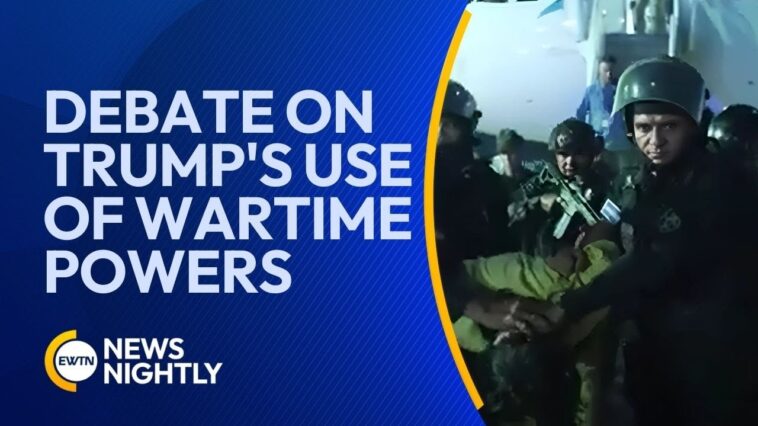

Wartime Authorities in a Modern Democratic Context
The American system of government is built on careful balances between the branches, and one of the trickiest parts of modern governance is the use and potential misuse of wartime authorities. With a constitution that divides power between Congress and the president, the application of these powers is not always straightforward. Today’s debates, especially under the current administration, have raised uncomfortable and nerve-racking questions about when and how these wartime powers should be used and whether they are creeping into domestic policy areas like immigration enforcement.
The Evolving Framework of Wartime Powers
Traditionally, wartime authorities were conceived as tools in times of actual armed conflict. In traditional applications, the president’s power as Commander-in-Chief was meant for repelling external aggression or managing military operations during legitimate wars. However, in recent years, arguments have been made in the public square that challenge this narrow understanding. Many now worry that the executive branch is slowly overstepping its traditionally limited role, trying to leverage these powers in circumstances far removed from conventional warfare.
This debate is full of problems because the application of wartime powers in domestic and non-military contexts involves several tangled issues such as:
- Shifting boundaries between war and peace
- The potential for unchecked executive discretion
- Unintended consequences for constitutional norms
These topics bring about some confusing bits and subtle parts of international law, requiring policymakers to figure a path through constitutional and statutory guidelines that were originally intended for armed conflicts.
Understanding the Legal Roots and Constitutional Balance
Historically speaking, the founders of our republic designed wartime powers to rest largely with Congress. Congress was tasked with the profound responsibility of declaring war—a decision meant to be deliberate and reflective. In contrast, the president was granted a more operational role: to be in command of the armed forces. Over time, legislative concessions and judicial interpretations have granted the president extraordinary discretion during conflicts; nevertheless, these powers are ideally meant to be used only in cases where a clear state of war exists.
It is essential to take a closer look at both the explicit constitutional provisions and the later legislative additions, such as the War Powers Resolution, which were intended to rein in any executive overreach. The understanding here is that even the very special wartime authorities come with built-in checks aimed at preserving the democratic order.
Domestic Implications: When Wartime Authorities Affect Immigration and Criminal Law
One of the most heated discussions in this arena is the claim that modern administrations might use wartime or terrorism-related authorities as stand-ins for regular criminal and immigration law enforcement. Critics argue that invoking wartime powers in the absence of any real armed conflict or credible external threat is both off-putting and loaded with issues.
This tactic allows for unilateral actions, such as the detention or deportation of immigrants, based solely on a president’s claim of national emergency. By commandeering these powers, leaders might translate the language of war into policy decisions that disrupt normal legal processes and infringe on civil liberties.
It is a nerve-racking prospect when we think about the potential abuse of such power. The very tools designed for a situation of actual hostilities become a cover for expanding executive authority in ways that might sidestep due process or disregarding constitutional safeguards. This shift blurs the line between the traditional role of defense and everyday law enforcement, creating lasting questions about the separation of powers in a democratic society.
Examining the Alien Enemies Act and Its Historical Usage
An often-cited example in this debate is the Alien Enemies Act, a statute dating back to 1798. Originally crafted in a time when mobilizing against foreign adversaries was paramount, it grants the president extraordinary removal powers in times of declared war or invasion. Historically, this act has been invoked only during major conflicts such as the War of 1812, World War I, and World War II.
Some key points about the Alien Enemies Act include:
- It applies only to non-U.S. citizens from countries with which the nation is at war.
- Its use is restricted to situations of declared war or clear acts of aggression.
- It demands due process before any removal or detention can occur.
When a modern leader attempts to invoke this act outside traditional wartime scenarios, such as for routine immigration enforcement, it not only misapplies an essential law but also risks tainting the serious legal legacy of the statute. The misuse of the term “enemy” in the context of immigration raises complicated pieces of ethical and legal questions, forcing observers to grapple with wrongfully conflating criminal or administrative issues with actual acts of war.
Understanding Foreign Terrorist Organizations and Wartime Authorities
Another area of concern is the designation of Foreign Terrorist Organizations (FTOs) by the State Department. FTO designations carry significant legal and economic consequences, such as blocking financial transactions or barring entry into the United States. The language used in labeling certain drug trafficking groups as terrorist organizations has been particularly controversial.
Understanding the fine points of FTOs includes recognizing that:
- Such designations do not automatically classify targeted groups as combatants in a genuine armed conflict.
- The language used in these designations is often vague, leaving room for broad interpretations that may overlap with traditional wartime powers.
- While FTO designations restrict certain forms of support and financial activities, they do not justify the use of lethal force or other wartime authorities unless there is an actual armed conflict.
This conflation between domestic criminal elements and the structured conduct of war is one of the more subtle parts of the contemporary debate. It risks overextending the intended criminal justice measures of FTOs into the realm of military engagement, an expansion that has not been constitutionally validated.
Presidential Authority to Use Force Against Criminal Enterprises
The conversation about wartime authorities inevitably overlaps with debates over the presidential power to use force. Recently, there have been discussions about whether the president could justify unilateral strikes against drug cartels or other criminal enterprises using wartime rhetoric. Such a move would violate multiple layers of law—both domestic and international—as it would extend the idea of force well beyond its proper mandate.
Several reasons explain why such actions would be highly problematic:
- They blur the distinction between combatants in a military conflict and civilian criminals.
- They risk sparking retaliatory actions that could trigger broader interstate conflicts.
- They undermine the constitutional allocation of war-declaring authority to Congress, a key safeguard against executive overreach.
If, for example, the president were to use force based solely on non-military threats or domestic criminality, it would not only violate international law as set forth in the U.N. Charter, but also pose serious challenges to the separation of powers. Such actions might lead to unlawful targeted killings and, in worst-case scenarios, could be seen as war crimes under the laws of armed conflict.
A Closer Look at the Authorization for Use of Military Force (AUMF)
Alongside traditional wartime authorities, the Authorization for Use of Military Force (AUMF) plays a key role in shaping modern U.S. military engagement policies. Passed by Congress, the AUMF is a statutory tool that authorizes the president to act in settings that are much different from a formal declaration of war.
The 2001 AUMF, enacted following the tragic events of September 11, 2001, is a case in point. Initially designed to target al Qaeda and its associated groups, its application has since been broadened to include other groups, such as those that might be seen as “successor” organizations. Critics argue that this expansion demonstrates a dangerous trend in which wartime powers are extended far beyond what individual statutes originally envisioned.
Notable aspects of the 2001 AUMF include:
- Its original intent was to counteract the threat of terrorism directly related to the 9/11 attacks.
- The statute has been used to justify a range of military actions, including detention without charge and other measures that skirt traditional legal boundaries.
- There is significant debate over whether such broad interpretations serve national security interests or instead undermine constitutional limits on executive power.
This evolution of the AUMF highlights the challenging twists and turns in the legal interpretation of wartime powers. When courts and Congress expand the scope of such statutes, the risk of overreach increases, potentially setting a precedent where war-like powers are invoked even when no actual armed conflict is present.
Comparing Wartime Powers: Domestic Emergency Provisions Versus Traditional Wartime Use
Beyond traditional wartime settings, modern administrations have increasingly turned to emergency powers to address pressing national issues. Acts such as the National Emergencies Act, the Insurrection Act, and the International Emergency Economic Powers Act (IEEPA) are being used as bases for actions that resemble wartime authority even in times of peace.
An important discussion point is the distinction between these domestic emergency tools and typical wartime authorities. Here are some key differences:
| Authority | Traditional Wartime Use | Modern Emergency Use |
|---|---|---|
| Constitutional Powers | Declared war, armed conflict engagements | Emergency orders, border control measures |
| Legislative Check | Congressional war declarations | National Emergencies Act with potential renewal loopholes |
| Judicial Oversight | Historically limited in wartime situations | Often subject to litigation and review for overreach |
This comparison underscores some fine shades of difference between what is traditionally accepted during formal armed conflicts and what is increasingly justified on the basis of national emergency or counterterrorism operations. The challenge remains in keeping these uses from bleeding into domains where they were never intended to reach—namely, routine domestic law enforcement or immigration matters.
Misapplying Wartime Rhetoric in Everyday Policy
One of the most heated critiques concerns the rise of rhetoric that conflates typical administrative or law enforcement activities with actual armed conflict. When politically charged language associated with war is used to justify everyday policies, it creates a nerve-racking scenario in which the public may begin to be desensitized to the gravity associated with wartime authority.
This use of war language carries both political and legal consequences. The president’s attempts to recast the administration’s actions in terms of combat operations or national emergencies can shift the focus away from a careful review of statutory mandates and constitutional limits. The result is that policies which should be carefully scrutinized as domestic law enforcement measures are instead cloaked in the language of external threat and security, muddying the waters for both legal practitioners and the public alike.
Using war rhetoric in this way can mask several issues, such as:
- The loss of due process for vulnerable groups
- The circumvention of traditional legislative checks
- The potential erosion of civil liberties that is normally protected during peacetime
These factors cause serious concern among legal scholars and constitutional experts, who warn that the deliberate blurring of these lines could lead to a dangerous precedent where emergency among everyday issues paves the way for even more unfettered executive power.
Lessons from Past Administrations and Historical Precedents
Looking back through history, it is useful to compare current legal practices with those from earlier administrations. In the aftermath of 9/11, for instance, the George W. Bush administration significantly broadened the interpretation of presidential powers. It used wartime authorities to justify aggressive counterterrorism measures that stretched legal boundaries and generated widespread criticism.
At that time, a flurry of legal and policy decisions led to:
- Expanded definitions of terrorism and associated groups
- Unilateral military actions in various theaters around the world
- Controversial practices like indefinite detention and extraordinary rendition
Although Congress and the courts eventually reined in some of these practices, the legacy remains a series of cautionary tales about the unintended consequences of diluting war powers. The current debates echo these lessons: a slippery slope towards unchecked power that, if left unchallenged, may erode the constitutional foundations that have long underscored American democracy.
The Role of Congress and the Courts in Checking Executive Overreach
The system of checks and balances is a cornerstone of American governance, and it is critical for both Congress and the judicial system to remain vigilant against any abuse of wartime authority. Historically, Congress has acted to limit executive discretion by:
- Passing legislation that clearly defines the scope and limits of wartime powers
- Enforcing the War Powers Resolution to require consultation and oversight
- Using budgeting and legislative oversight to restrict the president’s operational space
The courts, too, have stepped in when evidence of overreach emerges. Landmark cases remind us that even in times of emergency, the president is not above the law. For example, in the 1952 Steel Seizure case, the Supreme Court clearly stated that even in wartime, the executive branch must abide by congressional limits on power.
It is essential that both branches continue to sort out these issues with a combination of rigorous debate and judicial intervention when necessary. Without such active oversight, there is a real risk that a manufactured crisis could become the Trojan horse for further erosion of democratic norms.
Balancing National Security and Civil Liberties in Uncertain Times
One of the most super important considerations in the wartime authority debate is balancing timely national security action with the protection of individual rights. While no one disputes that national security is a critical priority, especially in an era of global terrorism and pandemics, there is mounting unease about how these security-related justifications might override fundamental rights.
For ordinary citizens, the ramifications of such policies can be both intimidating and overwhelming. When a government uses the framework of national security to take actions such as indefinite detention, mass surveillance, or extrajudicial actions, the effects on civil liberties are profound. The use of wartime authorities outside of their intended context can create a legal landscape where constitutional checks are bypassed in the name of security.
To protect against this, it is imperative that the government:
- Clearly defines the scope of powers used during emergencies
- Ensures robust due process in any application of wartime authority
- Maintains strict oversight through both legislative and judicial means
These steps help prevent the misguided application of military-style powers in everyday governance, thereby safeguarding the civil liberties that are the hallmark of a free society.
Implications for the Future of Executive Power and Legal Norms
As we assess the current landscape, it is clear that the debates over wartime authorities are far from settled. The shifting use of these powers and the likelihood of expanding their scope into new policy areas call for ongoing careful examination. The implications are not only legal but profoundly political. Moving forward, the judiciary, Congress, and an informed electorate must work together to ensure that the foundational balances of power are preserved.
This evolving situation brings with it several key considerations:
- How should historical legal concepts be updated in an era where threats are non-traditional?
- What are the potential long-term consequences of conflating war rhetoric with domestic law enforcement?
- What role can public debate play in reinvigorating the constitutional boundaries of executive power?
Addressing these questions requires an honest dialogue that acknowledges the shifting legal terrain while remaining anchored to the core principles of democracy. It is only by taking a closer look at the little details and the subtle parts of our legal framework that we can hope to steer through these troubled times.
Policy Recommendations and Steps Forward
Given the current legal debates and the potential for executive overreach, it is critical to put forward concrete recommendations that reaffirm the balance between security and liberty. Policymakers, legal experts, and advocates alike should consider the following actions:
- Reaffirm Congressional Authority: Congress should actively use its statutory powers to limit any expansion of wartime authorities into areas not originally intended, particularly in domestic policy domains.
- Strengthen Judicial Oversight: Courts must continue to rigorously review executive actions that claim to derive from wartime powers, ensuring that constitutional boundaries are not crossed.
- Legislative Clarification: Laws such as the AUMF and the Alien Enemies Act require updating or clarification to reflect modern values and safeguarding constitutional rights.
- Public Engagement: Increase public debate and scrutiny regarding the use of emergency powers, ensuring an informed electorate that can hold policymakers accountable.
- Balance Security and Liberty: Any measure that uses wartime or emergency powers must also incorporate stringent safeguards to protect individual rights and due process, thereby aligning national security measures with the nation’s broader democratic commitments.
Each of these recommendations serves as a crucial piece in the broader effort to recalibrate the balance of power. There is no easy fix for the labyrinth of issues at hand, but by taking measured steps, we can mitigate the risk of executive overreach while preserving the structures of our constitutional democracy.
Lessons Learned from Other Democracies and International Law
It is also instructive to look beyond the United States for lessons in managing wartime powers and emergency measures. Many other democracies have confronted similar challenges and taken steps to ensure that extraordinary powers are not abused. For instance, European countries have implemented strict parliamentary oversight measures and sunset clauses that automatically expire unless renewed by legislative vote. These practices ensure that emergency powers are limited in duration and scope.
Comparing our experience with these international examples helps highlight key areas for improvement:
- Time Limits and Renewals: Implementing automatic expiration dates for emergency declarations unless reaffirmed by Congress.
- Clear Definitions: Legally binding definitions of what constitutes an armed conflict or national emergency to prevent arbitrary applications of power.
- Transparency Requirements: Requiring regular public reporting and oversight on how these powers are being used, thereby reinforcing accountability.
These measures, rooted in both international practice and domestic legal principles, offer concrete steps toward ensuring that wartime authorities serve only in their proper roles and do not morph into tools for routine government overreach.
Reflecting on the Historical Legacy of Wartime Authorities
When we take a step back to view the historical trajectory of wartime authorities, it becomes clear that these powers have always been a double-edged sword. On the one hand, they have empowered the nation to respond effectively to serious external threats and maintain national security. On the other hand, their misuse—or even the mere prospect of their overuse—has at times led to severe consequences for civil liberties and democratic governance.
This historical legacy reminds us that the legal and political frameworks governing wartime powers were designed with both flexibility and restraint. The very fact that these powers are subject to legislative and judicial oversight is a testament to the deep-rooted caution that guides American democracy. However, safeguarding these boundaries requires active participation from all branches of government and an engaged public that is aware of the potential for abuse.
Concluding Thoughts: Charting a Course for the Future
In summary, the modern debates surrounding wartime authorities, the AUMF, the Alien Enemies Act, and related emergency powers present significant challenges for our constitutional system. The president’s attempt to extend wartime powers into domains such as immigration enforcement and domestic law enforcement is an alarming trend that calls for vigilant oversight and active debate among policymakers, the judiciary, and the public.
The central challenge is to balance the president’s need to react swiftly in times of genuine crisis with the equally important need to protect civil liberties and maintain the constitutional limits on executive power. As our nation continues to grapple with complex external threats and evolving internal challenges, it is super important that the core principles of our democracy—such as due process, legislative oversight, and judicial review—remain unassailable.
Looking ahead, it is imperative that Congress and the courts, together with an informed citizenry, work tirelessly to ensure that the extraordinary powers reserved for wartime are not misused in everyday policy making. Only through such a coordinated and transparent approach can we ensure that our legal system does not morph into a tool for unchecked executive control.
Ultimately, ensuring that wartime authorities remain appropriately bound by the limits set forth by our founding documents is not just a legal or political issue—it is a statement about the values we hold dear as a nation. By reaffirming the constitutional division of power and carefully scrutinizing any attempts to overextend wartime powers, we can protect the integrity of our democracy while effectively addressing the security challenges of our time.
This is a call to action for lawmakers, judicial authorities, and concerned citizens alike: let us stay vigilant in holding our government accountable and ensure that the precious balance of power, enshrined in our Constitution, remains a cornerstone of American life.
The debate is ongoing, and while the issues remain tangled with many twists and turns, it is our responsibility to work through these challenges with clarity, reason, and an unwavering commitment to the rule of law. Only then can we guarantee that the extraordinary powers designed for moments of true crisis are never misappropriated for the control of everyday policy, thus keeping our democracy robust even in times of uncertainty.
Originally Post From https://www.justsecurity.org/113973/wartime-authorities-when-can-president-use/
Read more about this topic at
ICYMI: The Fight Against Trump’s Presidential Overreach …
What are “Wartime Authorities”? An Expert Q&A